




GoPro solved one of the hardest problems in marketing: it got customers to promote the product for free. People bought GoPro cameras, filmed themselves surfing, skiing, biking, traveling, and doing other activities, then shared the footage online. Every impressive video showed potential customers what the camera could do. For a while, this created an unusually powerful growth engine. GoPro's revenue climbed from $64 million in 2010 to $234 million in 2011, $526 million in 2012, $986 million in 2013, and $1.39 billion in 2014. By 2013, the company had become the best-selling camera brand in the United States.
The problem was that GoPro's marketing machine was better at creating new customers than creating reasons for existing customers to spend again. A person could buy a GoPro, use it for years, and continue sharing videos without needing another camera. As the company approached the limits of its core market, it needed to find another way to make money from the audience it had already built. GoPro eventually developed a subscription business around cloud storage, software, and other services, but that came years after its biggest period of growth. The story offers a useful lesson for any business trying to grow: getting someone to buy your product is only part of the relationship. You also need to understand what that customer will need after the first purchase.
The Best Marketing Can Be Built Into the Product
A strong marketing strategy does not always require a company to create more advertisements. Sometimes, the product itself can give customers a reason to demonstrate its value to other people. The more naturally a product produces something worth sharing, the more opportunities a business has to turn customers into an acquisition channel.
GoPro had this advantage almost from the beginning. The company was created around a simple problem. Founder Nick Woodman wanted a better way to photograph himself while surfing, eventually developing a camera that allowed ordinary people to capture professional-looking action footage of themselves. As the product became smaller, cheaper, and better at recording video, it became useful for activities where a traditional camera was difficult to operate. Customers could mount the camera to themselves, capture footage while participating in an activity, and then share the result.

The timing made the idea even more powerful. GoPro's HD Hero launched in 2009, just as YouTube was becoming a major destination for online video. YouTube gave GoPro customers somewhere to put the footage they were creating, and the platform gave that footage an audience far beyond the person who originally recorded it. This combination could be described as as a user-generated marketing machine because customers were effectively producing demonstrations of GoPro's product and distributing them themselves. Many of those videos also displayed the GoPro logo, giving the company additional brand exposure whenever the footage circulated.

GoPro's own filings show how large this content ecosystem became. In 2014, more than 3.9 years of video containing "GoPro" in the title was uploaded to YouTube, a 40% increase from the 2.8 years uploaded in 2013. During that same year, videos published on GoPro's own YouTube channel increased 71%, views increased 84%, and minutes watched increased by more than 140%.
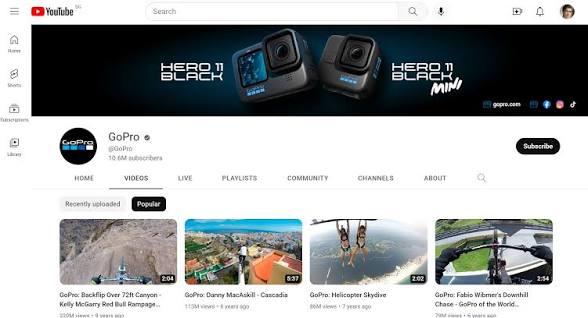
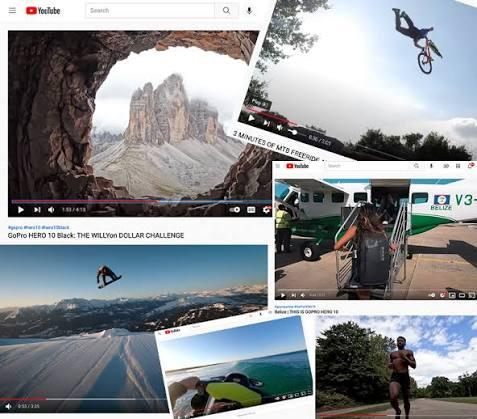
The financial results followed the attention. GoPro's 2014 annual report described its business model as a "virtuous cycle." The company explained that its products enabled customers to create compelling content, that content increased awareness of GoPro, and that the resulting awareness drove demand for additional products. GoPro generated $526 million in revenue in 2012, $986 million in 2013, and $1.394 billion in 2014.
That is what made GoPro's early strategy so effective. The company did not have to convince every potential customer through a traditional advertisement. Customers were constantly showing what the product could accomplish. Someone watching a surfing video, a bike ride, or another action clip could see the result and immediately understand why the camera was useful.
For an aspiring business owner, the broader lesson is to look for ways your product can create its own proof. A customer review can demonstrate value. A before-and-after result can demonstrate value. A piece of content created with your product can demonstrate value. A referral can demonstrate value. When the thing customers buy naturally gives them something they want to share, your marketing can become more efficient because every satisfied customer has the potential to help explain the product to the next customer.
GoPro, however, eventually discovered that an effective customer acquisition loop does not automatically create an effective customer retention loop.
A Large Audience Does Not Mean You Have an Endless Market
A business can become extremely good at attracting customers while still having a limited number of opportunities to sell its core product. That distinction becomes especially important when the product lasts for a long time. If customers are satisfied with what they already own, the company cannot assume that another marketing campaign will make them buy the same product again.
GoPro's cameras created exactly this problem. The company's growth depended heavily on selling physical cameras and accessories, but an action camera was not a product most people needed to replace frequently. Someone can keep an action camera for years, while the broader market of people interested in dedicated action cameras was relatively small. By 2014, GoPro had already become the leading action-camera company, meaning much of the obvious market had already been exposed to the product.
That created a difficult situation. The company had built enormous awareness, but awareness could not make the underlying market infinite. Once someone owned a GoPro, the next sale required either a replacement, an upgrade, or a new customer.
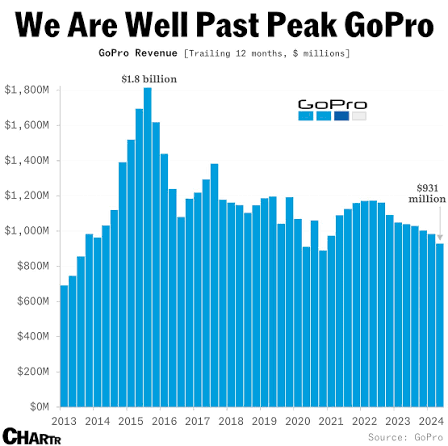
Smartphones made that challenge more significant. As smartphone cameras improved, many people who might previously have considered buying a separate camera had less reason to do so. A person who wanted to quickly record a family event, a vacation, or an everyday moment could simply pull a phone out of a pocket. GoPro therefore had to increasingly rely on consumers who had a specific reason to want a dedicated action camera.
GoPro's response was to search for ways to expand beyond the camera itself. The company explored becoming a media business by building an entertainment division and licensing footage created by its users. On paper, this made sense. GoPro had millions of clips and a large audience, so it could potentially monetize the content instead of simply using it as marketing. In practice, the model proved difficult. Licensing large amounts of user-generated footage created legal and operational complications, while the advertising revenue remained small.
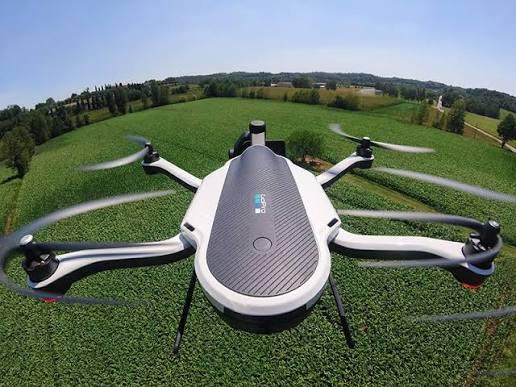
The company also tried expanding its physical product ecosystem. In 2016, GoPro launched a drone, hoping to move beyond its position as a single-product camera company. The attempt did not work as planned. The drone faced strong competition from DJI and was recalled shortly after launch. GoPro eventually left the drone market entirely.
These attempts reveal the problem GoPro was trying to solve. It did not simply need more attention. It already had attention. It needed a new way to convert the relationship it had with customers into additional value.
That distinction matters for other businesses because it is easy to confuse audience size with market size. A company might have thousands of followers, millions of views, or a strong community and still have very few products that those people actually need. An audience can help you acquire customers, but you still need an offer that gives those customers a reason to continue spending.
GoPro's experience shows why businesses should think about the customer journey beyond the first transaction. If someone buys your product once and does not need it again for several years, you need to understand what else could provide meaningful value during that period. Otherwise, your growth strategy will always depend on finding the next customer.
For GoPro, that meant looking beyond the camera and toward the problems customers had after buying one.
Your Next Revenue Stream Should Build on the Customer You Already Have
When a business has already established a strong relationship with customers, the next opportunity does not necessarily require inventing an entirely new product. Often, the better opportunity is to identify a problem created by the original purchase and build a service around it.
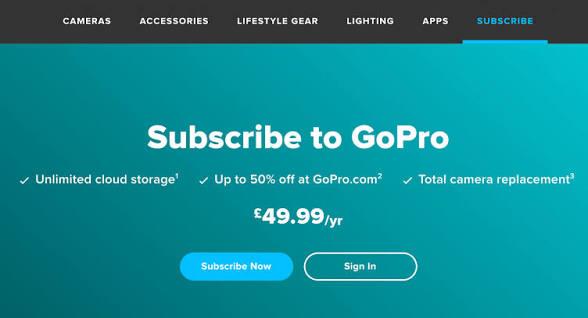
GoPro eventually moved in this direction with subscriptions. The company began pushing its subscription offering heavily around 2020, providing benefits such as cloud storage, software features, and camera or gear replacement. The logic was straightforward. GoPro customers were already producing large amounts of video. Instead of only making money when those customers purchased another camera, GoPro could continue serving them after the initial purchase.
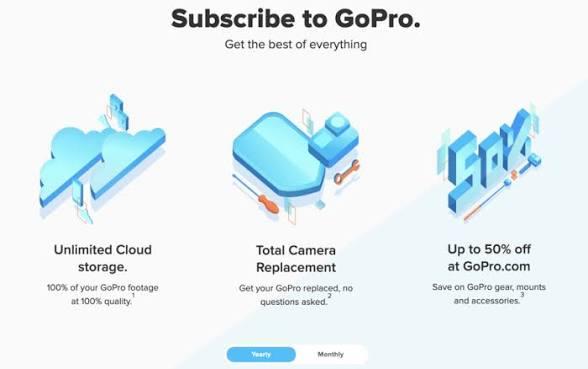
That changed the relationship between the customer and the company. The original camera remained important, but it became the starting point for a longer relationship. A customer could buy a camera, create footage, upload that footage, store it in the cloud, use GoPro's software, and continue paying for the services connected to the camera. GoPro no longer had to wait for the customer to decide that it was time for another hardware purchase.
The subscription business eventually became meaningful. GoPro reported 2.5 million subscribers in the first quarter of 2024, along with approximately $125 million in annual recurring subscription revenue. The company also reported a 69% annual subscriber retention rate at that point. Later in 2024, its subscriber base reached 2.52 million, while its subscription and service revenue for the full year reached $107 million. The company also reported that subscriptions had a higher gross margin than its hardware business.
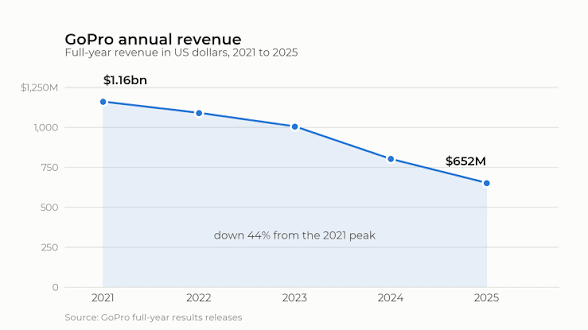
The business continued generating more than $100 million from subscriptions and services in 2025. GoPro reported $106 million in subscription and service revenue for the year, compared with $545 million in hardware revenue. The company ended 2025 with 2.36 million subscribers.
Those numbers show that the subscription strategy created real value, but they also show why timing matters. Subscription revenue was meaningful, yet hardware remained the larger part of the business. GoPro's total revenue fell from $801 million in 2024 to $652 million in 2025, while hardware revenue declined from $695 million to $545 million.
The subscription therefore did not magically solve every problem GoPro had created. What it did was demonstrate a better way to monetize the relationship with an existing customer. Instead of asking, "How do we convince this person to buy another camera?" GoPro could ask, "What does this person need because they already own a camera?"
If your product has a long replacement cycle, you do not necessarily need to shorten that cycle. You can look at the problems customers experience between purchases. A photographer might need storage, editing tools, or ongoing education after buying a camera. A software company might provide additional services, automation, or premium features after someone starts using its basic product. A fitness business might turn a one-time program into ongoing coaching or a membership. The specific offer depends on the customer, but the underlying strategy is the same.
The Takeaway
GoPro's story starts with a company that figured out how to turn its customers into marketers. The camera made it possible for people to capture footage they wanted to share, YouTube gave them a massive distribution channel, and the resulting content helped GoPro sell more cameras. That growth loop was powerful enough to take the company from $64 million in revenue in 2010 to nearly $1.4 billion in 2014.
But the same story also exposed the limit of that strategy. GoPro could keep attracting attention, yet customers did not need to buy action cameras at the same rate forever. The company eventually faced a more competitive hardware market, stronger smartphone cameras, and the natural limits of a product with a long replacement cycle. Its attempts to expand into media and new hardware did not create the second engine it needed.
Subscriptions finally gave GoPro another way to monetize its existing customer base. Instead of relying entirely on another camera sale, the company could make money from services that became useful after customers bought the camera.
Getting the first sale is only the beginning of the customer relationship. If your product lasts for years, or if customers have little reason to buy it repeatedly, you should think about what happens after the purchase. What problem does your customer encounter next? What service could make the original product more valuable? What could you offer that keeps your business useful even when the customer does not need another version of the original product?
GoPro's strongest asset was never simply the camera. It was the relationship the camera created with its users. The company eventually found a way to monetize more of that relationship through subscriptions, but it took years to build that second revenue engine.
For a growing business, the lesson is to start asking that question earlier. Your first product can get people to pay you. Your next offer can give them a reason to keep doing it.