



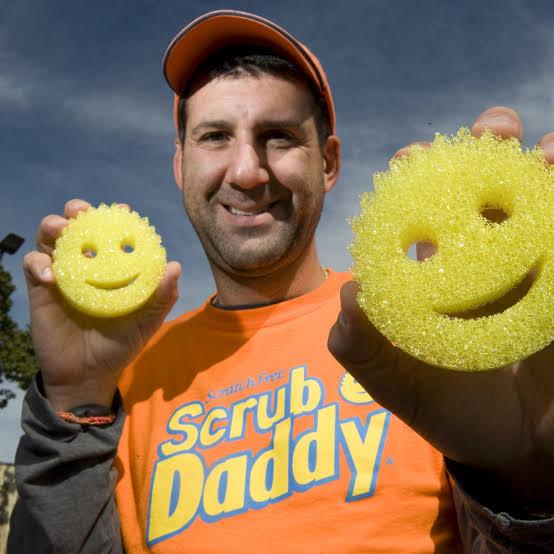
Scrub Daddy grew from a rejected hand scrubber into a cleaning brand that generated roughly $220 million in sales in 2023. The company did not get there simply because Aaron Krause invented a better sponge. Its growth came from a series of decisions that made the product easier to sell at every stage. Krause first found where his unusual material created the most value, then figured out how to make that value obvious to customers, and finally found distribution channels that could bring that demonstration to millions of people.
The story is often reduced to Scrub Daddy's appearance on Shark Tank. In 2012, Krause walked onto the show and left with a $200,000 investment from Lori Greiner for 20% of the company. Within 24 hours of the episode airing, Scrub Daddy reached $1 million in sales. But Shark Tank was the amplification of a strategy that Krause had already spent years developing. Before he ever appeared on television, he had to figure out what his product was actually good for, how customers needed to experience its value, and how to get that experience in front of more people.
Find the Use Case Where Your Product Creates the Most Value
When a product struggles, the problem is not always the product itself. Sometimes the business has not found the customer or situation where its advantages matter enough to create demand. Before spending more money on marketing or changing the product, businesses can benefit from figuring out where what they already have solves the strongest problem.
Krause originally discovered the material that would become Scrub Daddy while developing products for automotive detailing. He eventually experimented with using the material as a hand scrubber for mechanics, but the product struggled because mechanics already had cheaper and more familiar ways to clean their hands. At roughly $4.50, Krause could not convince enough customers that the scrubber was worth switching to. When he eventually sold his company to 3M, the scrubbers were considered so unimportant that they were left behind, where they sat in the factory for years.
The product's potential became clearer when Krause encountered a completely different use for it. His wife asked him to clean their outdoor furniture, so he grabbed one of the old scrubbers and started working. He noticed that the material became soft in warm water and harder as it cooled, making it increasingly effective at scrubbing. When he put it back into warm water, it softened and rinsed clean. The material had always behaved this way, but Krause had not previously found a situation where that characteristic mattered so much.
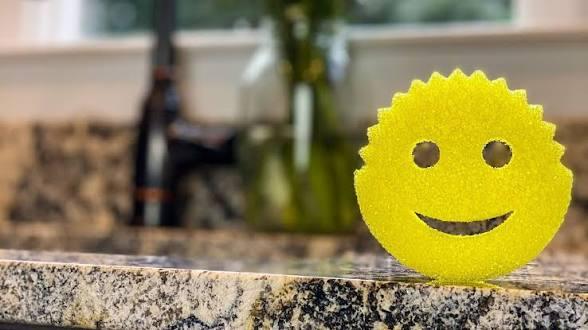
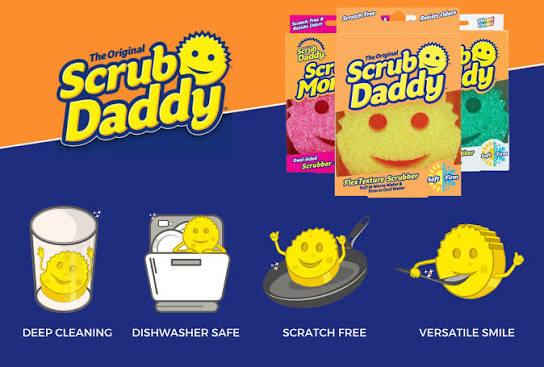
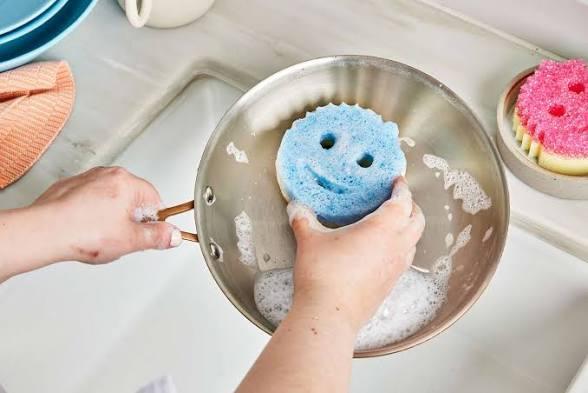
That discovery led him to try the material on dishes, where its advantages became even more useful. Krause realized that the existing holes allowed him to reach inside a mug while cleaning its sides and bottom at the same time. He then cut a smile into the sponge and discovered that he could place silverware through the opening and clean both sides at once. The product was no longer simply a piece of unusual foam. Its material, shape, and intended use were beginning to work together.
This is where the first major lesson from Scrub Daddy emerges. Krause did not create demand by completely reinventing the product. He found a customer and use case where the characteristics he already had became significantly more valuable. The same material that struggled to justify its price to mechanics suddenly had several obvious advantages in household cleaning.
For other businesses, that means a weak market response does not automatically mean the product needs to be rebuilt. Sometimes the more important question is whether you are selling it to the right person or positioning it around the right problem. Krause's product had been sitting unused for years because he had not yet found the environment where its advantages mattered.
Once he found that environment, however, he still had another problem to solve. Customers needed to understand why Scrub Daddy was different from the countless other sponges already sitting on store shelves.
Make Your Product's Difference Easy to Understand
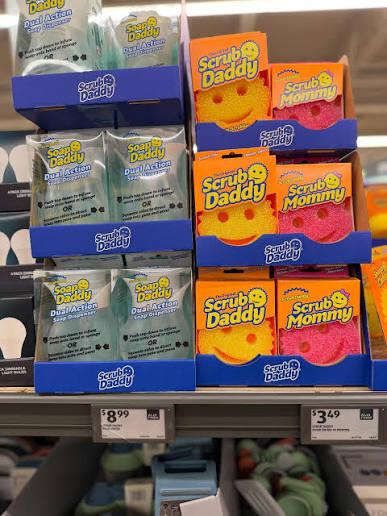

A product can have a genuine advantage and still struggle if customers cannot recognize that advantage quickly. This becomes especially important when a product looks familiar. Scrub Daddy was still a sponge, so simply putting it next to other sponges did not explain why shoppers should choose it.
Krause began pitching the product to grocery stores through a friend who owned five local stores. He spent hours demonstrating and selling Scrub Daddy, often working most of the day to get the product in front of buyers and customers. The experience taught him something important about the product's sales process. Scrub Daddy was much easier to understand when people could watch it being used than when they simply saw it sitting on a shelf.
That made the demonstration itself part of the product's marketing advantage. Krause could show customers how the sponge behaved in different temperatures, how the material changed, and how the unusual shape helped with specific cleaning tasks. Instead of asking customers to trust a claim that Scrub Daddy was better, he could let them see the difference themselves.
The same dynamic eventually appeared during Krause's Shark Tank pitch. Lori Greiner initially questioned whether Krause's demonstration was legitimate. She noticed that he had used different sponges and weights during the presentation and suspected that something might have been manipulated. Rather than relying on another explanation, she tested the product herself by putting it into hot and cold water. Once she watched the sponge change texture, the central claim was proven.
That moment shows why Scrub Daddy had such a strong marketing advantage. Its most important feature could be demonstrated almost immediately. Customers did not need to understand the chemistry behind the material or read a detailed explanation of how it worked. They could watch it change and then see how that change affected the way they used it.
For a business, this is an important distinction. Having a better product is only useful if customers can understand why it is better. If your strongest advantage requires several minutes of explanation, look for a way to demonstrate it instead. A before-and-after, a live test, a sample, or a visual comparison can often communicate a product's value more effectively than a long sales pitch.
Scrub Daddy had now solved two problems. Krause had found a market where the product created meaningful value, and he had discovered how to make that value obvious. The remaining problem was scale. He could demonstrate the product to shoppers himself, but he could not personally show it to everyone who might buy it.
Main Takeaway
Scrub Daddy's success was not built around one lucky appearance on Shark Tank. The company moved through three connected problems, and solving each one made the next stage possible.
First, Krause found where the product created the most value. The material had struggled as a mechanic's hand scrubber because customers did not value its advantages enough. Once Krause discovered its potential for household cleaning, the same material suddenly had a much stronger reason to exist.
Then he figured out how to communicate that value. Scrub Daddy was difficult to understand when it simply sat on a shelf, but its advantages became obvious when Krause demonstrated the changing texture and unusual design. The product itself became the proof behind the marketing.
The progression is what makes the story useful for other businesses. Finding the right market gave Scrub Daddy something worth selling. Making the value obvious gave customers a reason to believe in it. Finding the right distribution gave the company a way to turn that proof into much larger growth.
That foundation eventually allowed Scrub Daddy to become much more than one sponge. By 2023, the company had generated roughly $220 million in sales and expanded into a much broader family of cleaning products. Krause has described the original product as what "launches the company," with the business then developing new products around needs it identifies in the market.
For businesses trying to grow, the lesson is not to copy Scrub Daddy's smiley face or try to get on Shark Tank. It is to follow the sequence that made those things valuable in the first place. Find the problem where your product creates the most value, make that value easy for customers to understand, and then find a distribution channel that can scale the way you sell it.
Scrub Daddy found the right problem, turned its advantage into a demonstration, and then built distribution around that demonstration. That is what turned an overlooked product into a major business.