


Source: Behold
5-MeO-DMT clinics have months-long waitlists as interest in psychedelic mental health treatments continues to grow. The trend shows how fast new markets can emerge when demand outpaces supply.
Rather than announcing itself all at once, a market tends to show up first as a waitlist, a price tag people are still willing to pay, and a growing pile of research nobody quite knows what to do with yet. That's more or less where the psychedelic therapy space is right now, and 5-MeO-DMT sits right at the center of it.
Context
Source: ScienceDirect Study
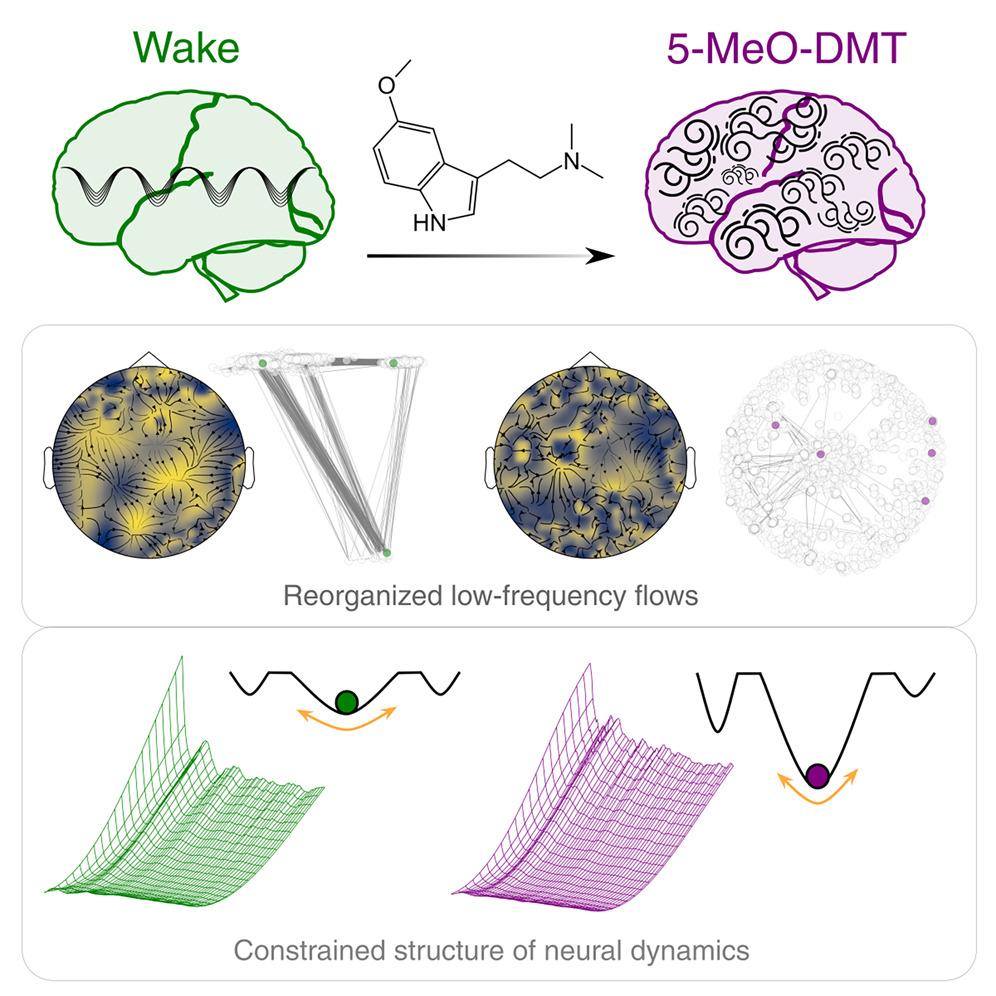
5-MeO-DMT is a naturally occurring psychedelic compound found in certain plants and in the secretions of the Sonoran Desert toad, sometimes called the Colorado River toad. It's also made synthetically. The experience itself is short, usually 15 to 45 minutes, but intense, often described as a complete dissolution of ordinary consciousness. Researchers are looking at it, early and cautiously, as a possible treatment for depression, anxiety, and PTSD.
The science is still young, but the interest has moved a lot faster than the science, and that gap is basically where a new market starts to form.
New Markets Form When Demand Grows Faster Than Supply
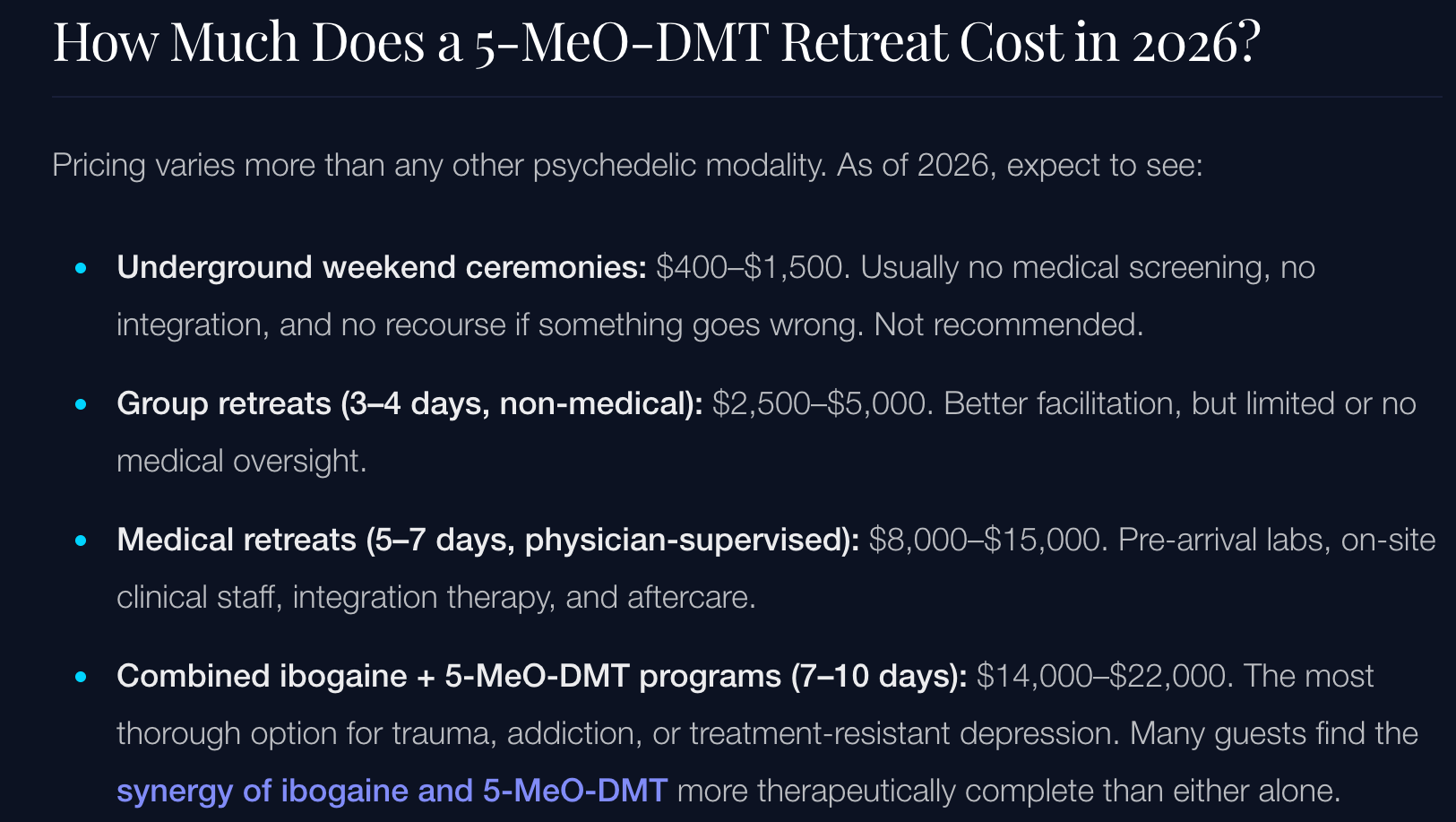
Source: MindScape Retreat Article
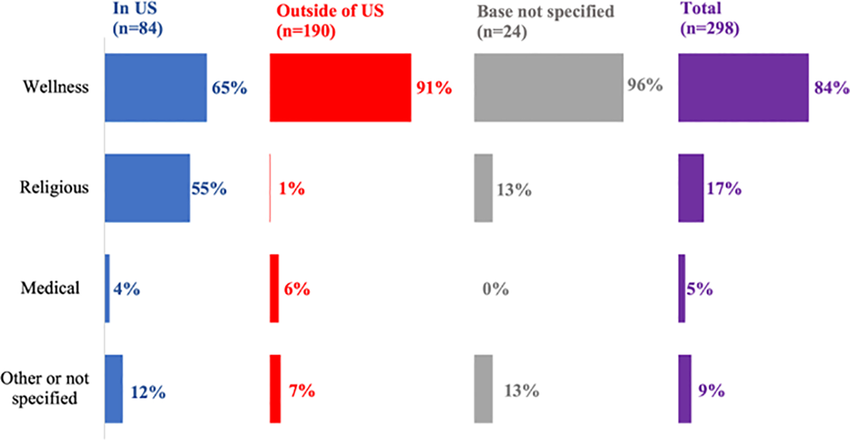
Source: ResearchGate Study
A market doesn't need a finished product to get going, it just needs enough people willing to pay for something that's still hard to get. The 5-MeO-DMT space checks that box in a few ways.
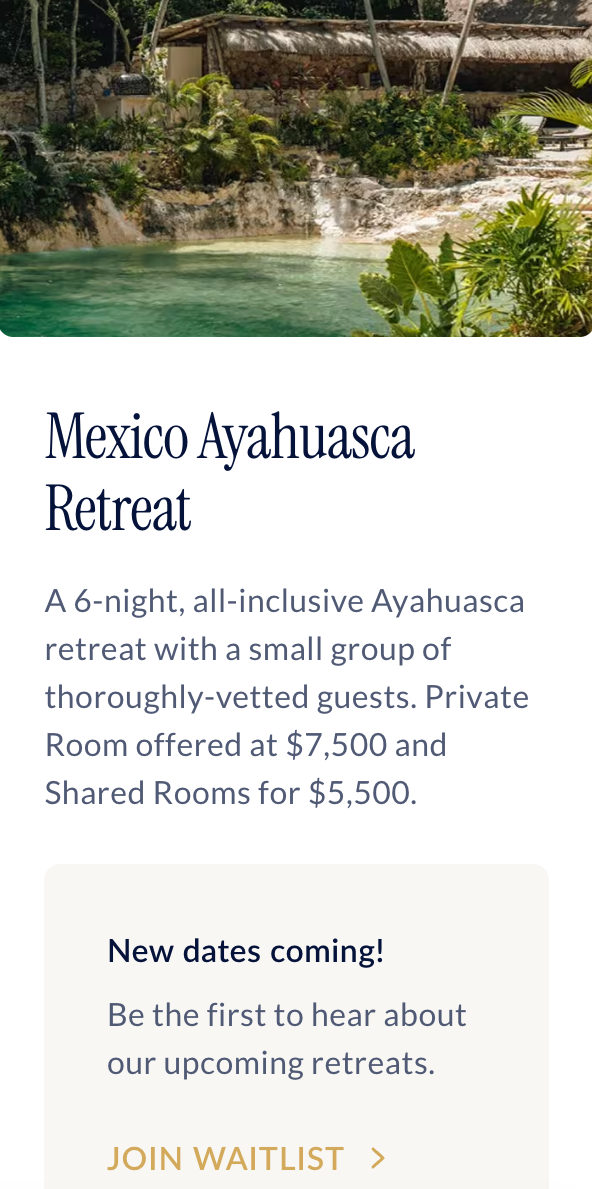
Start with the waitlist itself. Some clinics offering 5-MeO-DMT treatment report waits stretching up to six months, with pricing that ranges anywhere from a couple thousand dollars for a shorter group ceremony to well over $10,000 for a longer, medically supervised one. That's a wide range, but even at the low end, it's not exactly an impulse buy, and people are lining up for it months ahead of time anyway.
A lot of that demand turns into travel, too. Since the therapy is unavailable or heavily restricted in a lot of countries, including much of the U.S., Mexico has become something of a hub for medically supervised programs. Coverage of psychedelic tourism has described people flying internationally, sometimes more than once, just to get access to something they can't find at home.
Underneath both of those is a real, if early, research case. Some studies suggest psychedelic-assisted therapies might help people who haven't responded to more conventional depression or PTSD treatments, a group psychiatry has historically had a hard time reaching. People who've already tried the standard options and come up empty are exactly the kind of motivated buyer that can pull a market into existence faster than supply can keep up.
Put the waitlists, the travel, and the research together, and the picture's pretty clear: this is a market still catching up to demand, not one that's found its footing yet.
Scientific Research Is Driving Interest in Psychedelic Medicine
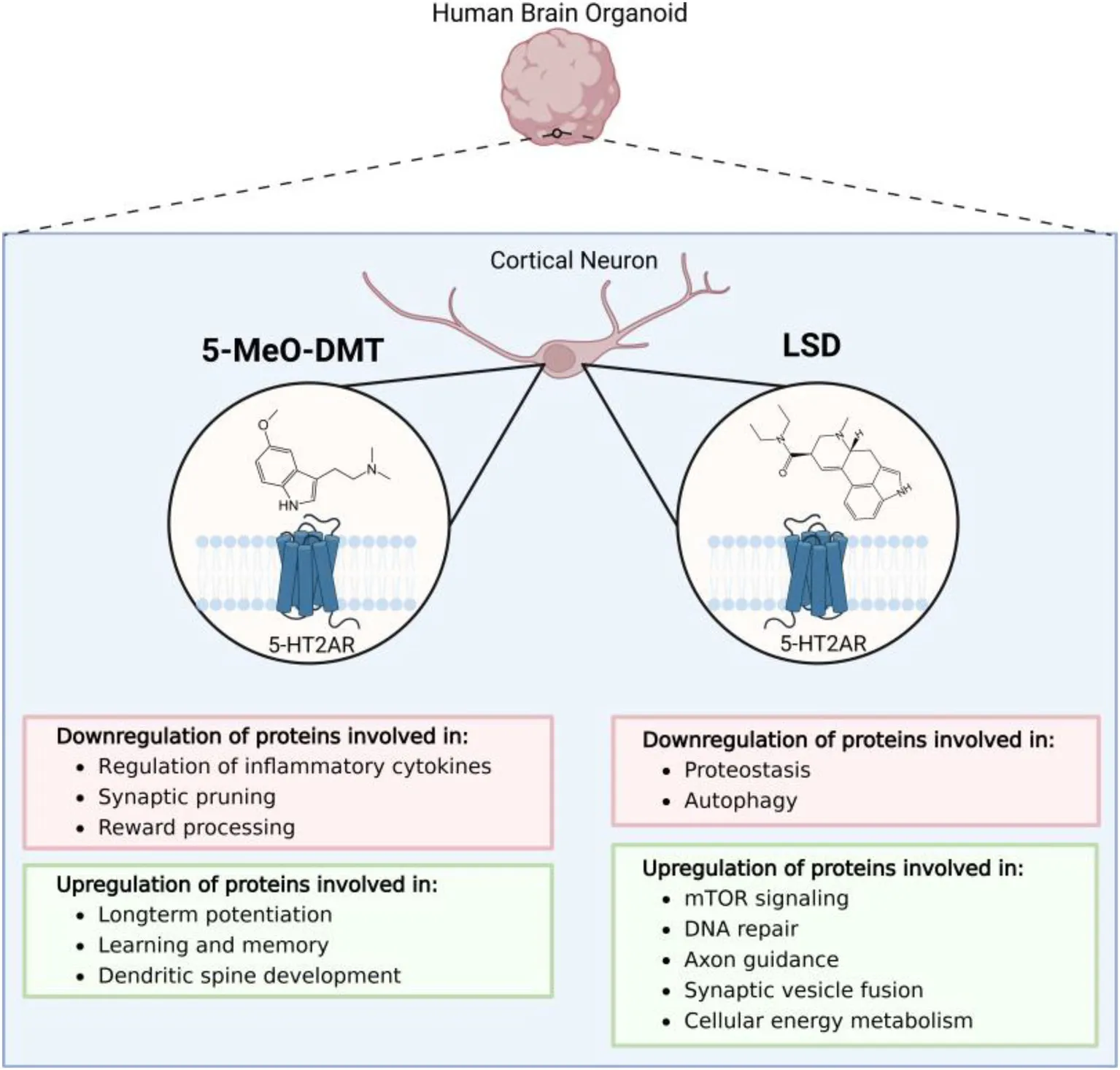
Source: Johns Hopkins Study
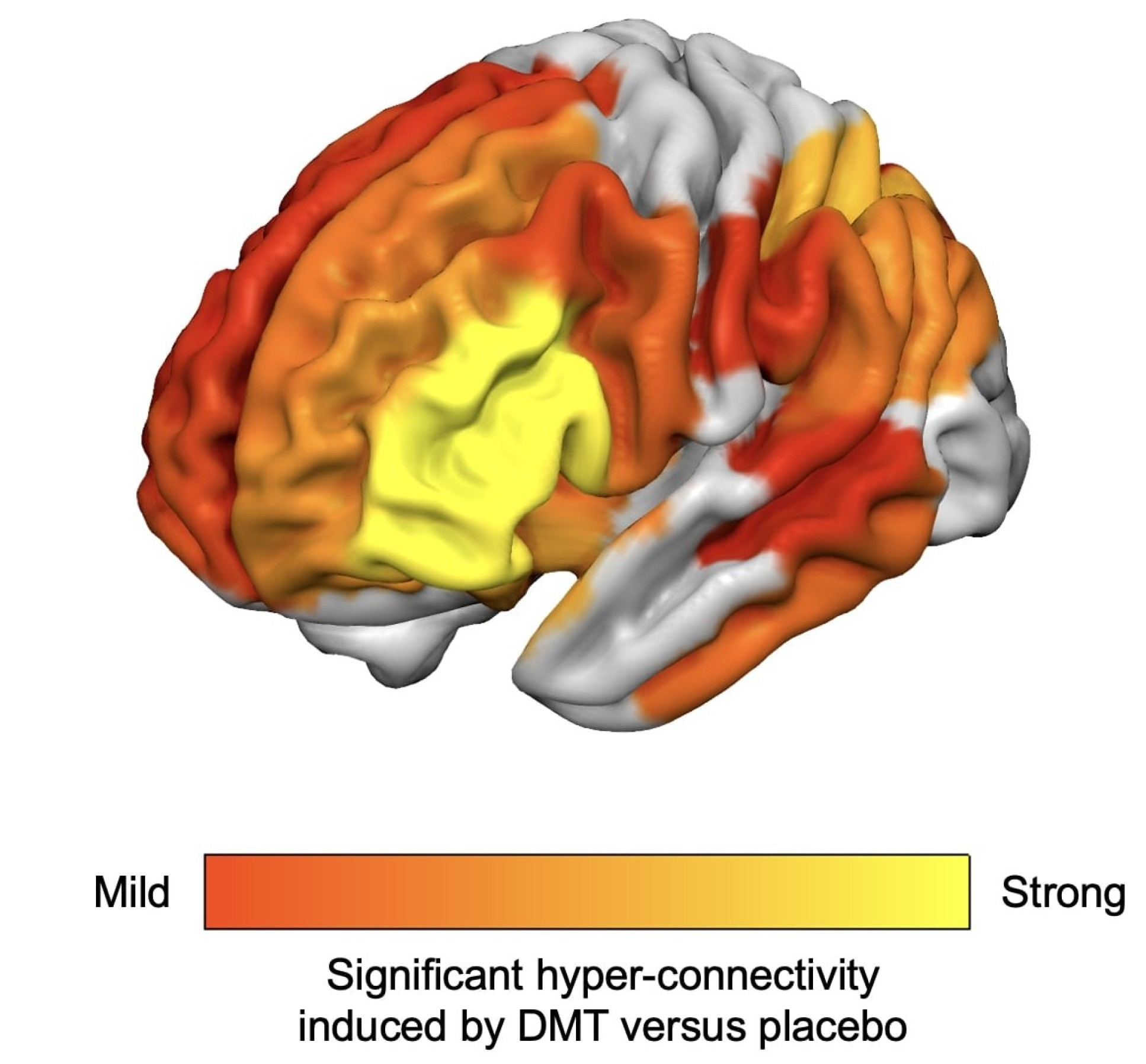
Source: Imperial College London Study
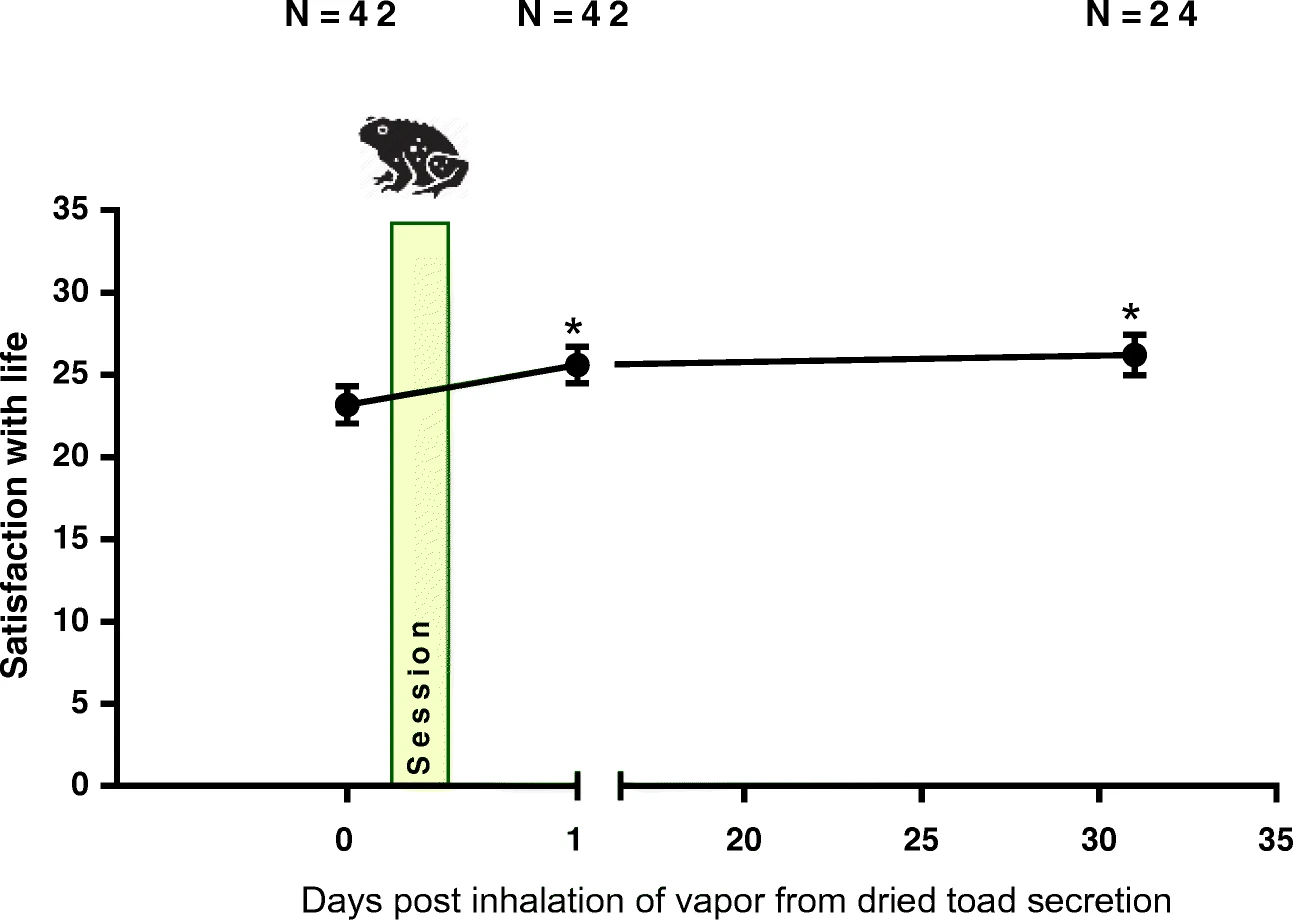
Source: Maastricht University Study
Interest in a new treatment usually tracks pretty closely with how promising the early research looks, even when that research is far from settled. Psychedelic medicine is a good example of that playing out in real time.
The research itself is a big part of it. Early clinical studies have suggested 5-MeO-DMT may ease symptoms of depression, anxiety, and PTSD for some patients, sometimes fairly quickly. That speed matters: a lot of conventional antidepressants take weeks to do anything, while some of this research has pointed to real shifts within days of a single session.
It's not just anyone doing the research, either. Institutions like Johns Hopkins, Imperial College London, and Maastricht University have all published findings on 5-MeO-DMT specifically, not just psychedelics in general, which gives the compound a more serious research footprint than a lot of emerging treatments get this early on.
Where there's serious research, money tends to follow. Universities, biotech firms, and healthcare startups have been putting real capital into psychedelic research and clinical trials, treating the space less like a fringe curiosity and more like a legitimate, emerging category of medicine.
Worth saying plainly, though, researchers in this space keep pointing out that a lot more work is needed before anyone can draw firm conclusions. Early results, a growing list of serious research institutions, and real capital moving in are three different signals pointing the same way: this field is being taken seriously enough that a market is forming around research that hasn't finished playing out yet.
Entrepreneurs Can Build Businesses Around Emerging Trends
Source: aldasmallthings Article
A fast-growing industry usually creates more opportunity outside its core product than inside it, since the product tends to soak up all the attention while the problems it creates go mostly unaddressed. A few companies in the broader psychedelic space show what that actually looks like.
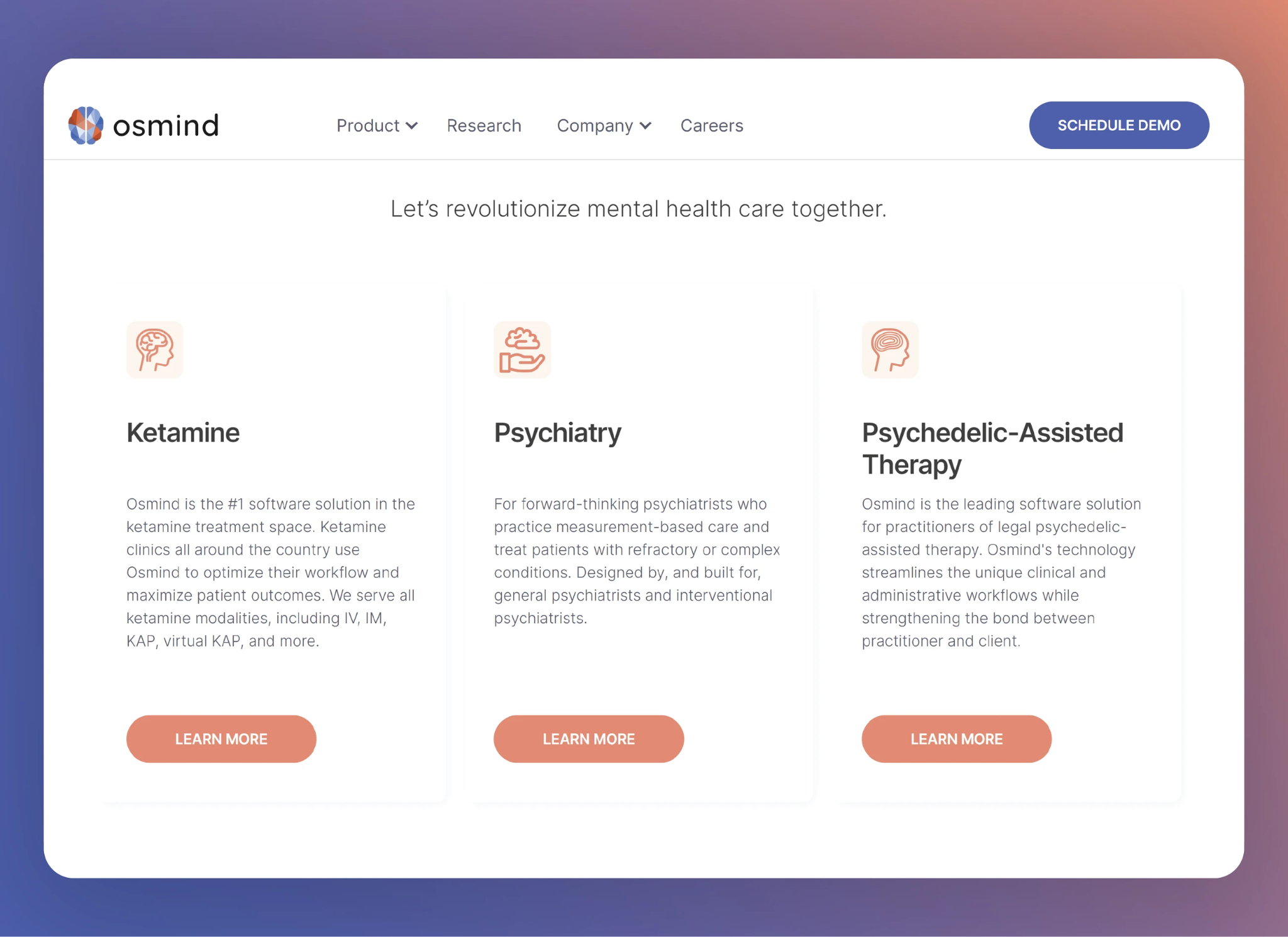
Osmind is a good example. Instead of administering any treatment itself, it built a clinical management and data platform for mental health providers running psychedelic-assisted therapy, a software business that grows right alongside clinical adoption without taking on the same medical or regulatory risk as the clinics themselves.
Mindbloom took a different angle into the same industry. It built a telehealth model around psychedelic-assisted therapy, connecting patients with licensed clinicians remotely and mailing treatment directly to people who don't live near a specialized clinic, solving an access problem instead of competing head-on with the in-person providers.
Field Trip Health kind of split the difference, pairing physical clinics with a digital platform meant to help patients prepare for and process their sessions, treating the software and support side as just as important to the business as the clinical part.
None of these three are actually selling 5-MeO-DMT or fighting for the same waitlist spots as the clinics making headlines. Each one found a different problem next to the main trend, data and practice management, access, or preparation and integration, and built a business around solving that instead. That's really the pattern behind a lot of businesses built around emerging trends: the biggest opportunities tend to come from solving the problems a fast-growing market creates, not from chasing the same customers everyone else is after.
Main Takeaway
The waitlists, the research, and the businesses forming around both all point the same way: fast-growing markets tend to create more opportunity than just the product everyone's talking about.
5-MeO-DMT clinics are a pretty striking example of demand outrunning supply in real time, months-long waits, high prices, international travel, all while the underlying science is still getting worked out. That gap is exactly where new business opportunity tends to show up, not necessarily in providing the treatment itself, but in solving the problems that come with a market moving faster than its infrastructure can support.
For businesses more broadly, the biggest opportunities often come from solving the new problems a fast-growing industry creates, not just following the trend itself.
Looking ahead, as psychedelic research keeps going and regulations probably evolve alongside it, the businesses that built trust and useful infrastructure early, regardless of how the clinical picture eventually settles, seem like the ones likely to still be standing once this space matures into something closer to mainstream healthcare.