



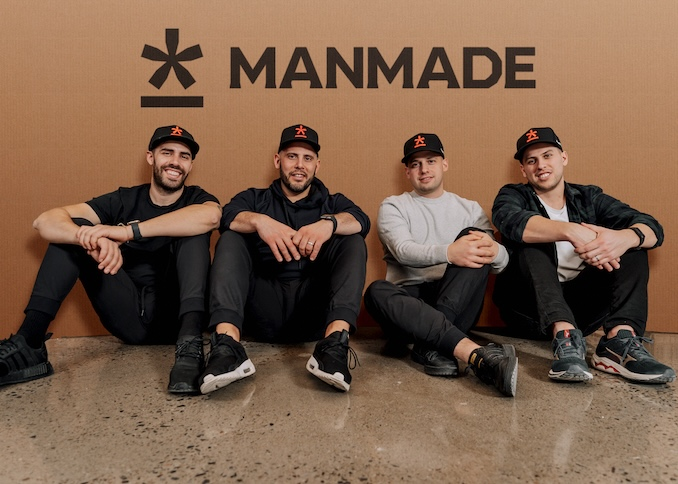
Manmade launched its first men's underwear in 2021 and could barely move it off the shelf. A handful of orders came in each day, nowhere near enough for four guys who'd just left finance careers to bet everything on boxer briefs.
Roberto "Berto" Rebelo, Anthony Ciavirella, Philip Santagata, and Robert Marzin had spent nearly a year developing the product, working through roughly 30 versions across more than two dozen manufacturers in 10 countries. When they finally launched with 10,000 pairs, the marketing followed a familiar underwear-industry playbook: polished model shots designed to make Manmade look like a scaled-down Calvin Klein.
The rest of the story reveals that you can spend a year perfecting a product and still have no idea what makes people want it, until you actually ask the people buying it.
Don't Assume You Know Why Customers Choose You
The underwear itself had already gone through a year of refinement before a single customer ever touched it. The real problem was the story wrapped around it, which sounded a lot like every other underwear brand's pitch.
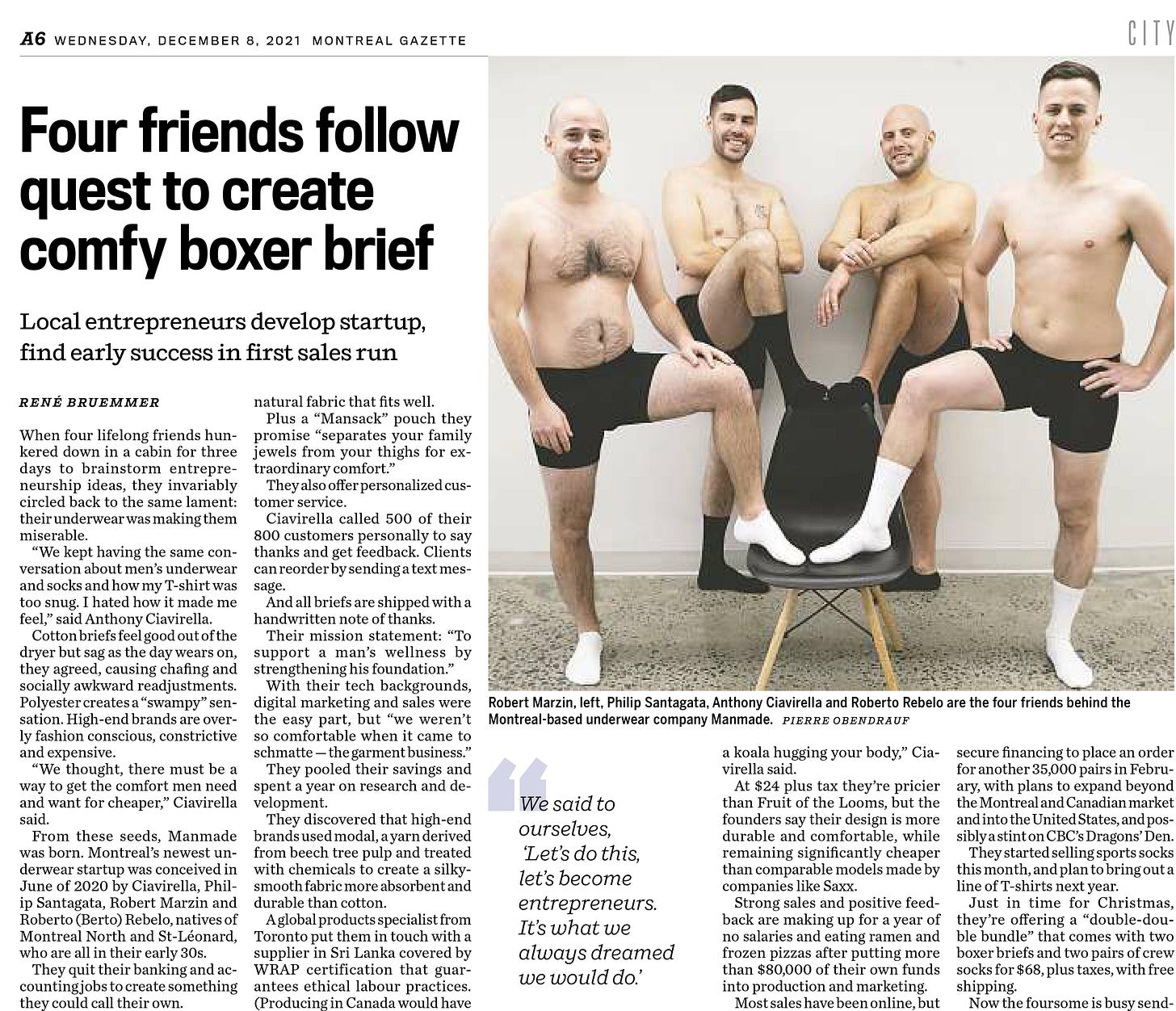
A local Montreal newspaper accidentally changed that. In late 2021, The Montreal Gazette ran a front-page feature on the four founders themselves: ordinary guys who had left banking to make underwear they actually wanted to wear. Manmade sold out within three days of the story running.
The product stayed exactly the same. What changed is that customers finally saw the real people behind it instead of a generic campaign that could have belonged to any brand on the shelf, and that alone outperformed a full year of trying to look the part.
Assuming you already know what draws people to your business can be risky because the real answer may be completely different. Manmade had focused on looking like a bigger, more established brand, while the thing that resonated with customers was four unpolished founders telling a story that was entirely their own.
Ask Customers What Made Them Choose You
Once the sales spike hit, the founders wanted to understand why. They picked up the phone and called all 1,000 people who had just bought from them, asking one simple question: Why did you buy from us?
The answers kept coming back to the same idea. Customers liked the opposite of the polished, established image Manmade had been trying to create: four real people, a straightforward product, and nothing too flashy. That was the part connecting with buyers, even though it wasn't the story the founders had been telling.
Surveys and focus groups can tell you how people think they might respond to something. These calls offered something more concrete because every person on the other end had already spent real money. Their answers explained a decision they had actually made rather than one they might make someday.
Rebelo has credited those calls with giving the company much of its early understanding of product-market fit. The cost? Mostly the time it took to dial 1,000 numbers.
Turn What Customers Tell You Into Action
View this post on Instagram
Gathering those answers only matters if a business actually does something with them. For Manmade, that's where an unexpected sales spike became a real strategy.
The founders moved away from the buttoned-up, corporate underwear-brand look and put themselves at the center of the brand instead. Berto started filming four organic TikToks a day. All four founders began answering customer questions themselves on social media and slipping handwritten notes into every order.
Those changes required no product redesign or major funding. They came from trusting what 1,000 paying customers had already told them over the instinct the founders started with.
Manmade has since expanded well beyond its original boxer briefs, and by 2026, the company reported surpassing 1 million lifetime customers. That growth has included television spots, national ad campaigns, and celebrity partnerships, but the foundation traces back to those first 1,000 phone calls.
Takeaway
The accidental sellout, the calls to the first 1,000 buyers, and the shift toward founder-led content all point to the same lesson: understanding why customers already care can be more valuable than trying to manufacture a reason for them to care.
Going back to the beginning of this story, a company can spend a year getting a product exactly right and still misunderstand what's actually selling it. Often, the answer lives with the people already buying, not inside the business itself.
Any business can use the same approach without needing a viral local news story to kick things off. Reach out to your existing customers and ask the same simple question Manmade asked: Why did you choose us? Then look for the answer that keeps coming up. That insight can give you a much stronger foundation than anything your company assumes about itself from the inside.