



Duolingo has turned language learning into something people feel compelled to return to every day. The app has more than 34 million daily users, yet most of them do not pay. Its success comes from making language practice feel less like another responsibility and more like a habit users have a reason to maintain. Duolingo does this through three things: gamification that makes progress worth protecting, personalized notifications that pull users back in, and a product designed to make daily practice incredibly easy.
The Streak Turns Learning Into a Game
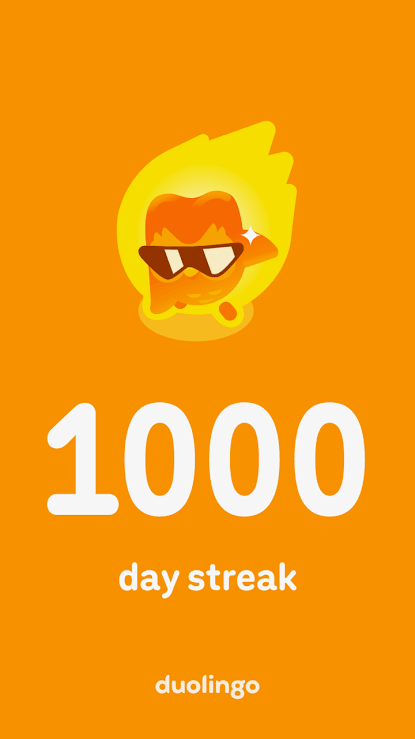

The famous Duolingo streak gives users a reason to open the app even when learning a language is not at the top of their priorities. Instead of simply completing lessons, users are trying to maintain something they have already built.
Duolingo reinforces that feeling throughout the app. Users earn experience points, move through progress bars, have limited lives, and follow a structured learning journey. These features make progress visible and give users another reason to keep playing. The company credits this combination of being mobile, free, and fun with helping it quickly attract millions of users. They even make room for a missed lesson or day with a feature called “Streak Freezes”. They are a shield for 24 hours for any users who missed a day of learning.
Repeated use can becomes easier when customers have something they actively want to maintain.
Your Notifications Are Not the Same as Everyone Else's
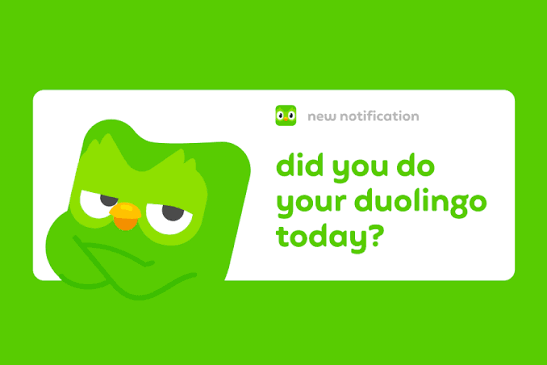
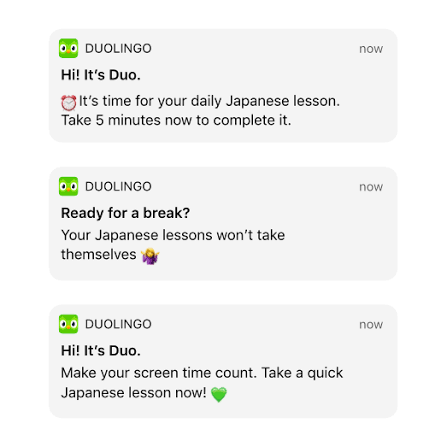
The streak creates the reason to return, but Duolingo also reminds users when they are about to break the habit. What makes those reminders interesting is how much experimentation happens behind them.
Duolingo constantly tests different messages, timing, and approaches to determine what gets people back into the app. Its AI helps identify which notifications work better for particular users and at different times of day. The company has even turned its notifications into a source of entertainment, using Duo's personality and increasingly ridiculous messages to get attention. One notification telling users that Duolingo would stop sending reminders reportedly increased retention by 3%.
What looks like a funny notification is actually part of a system designed around learning what makes individual users return.
Duolingo Makes Returning Easy

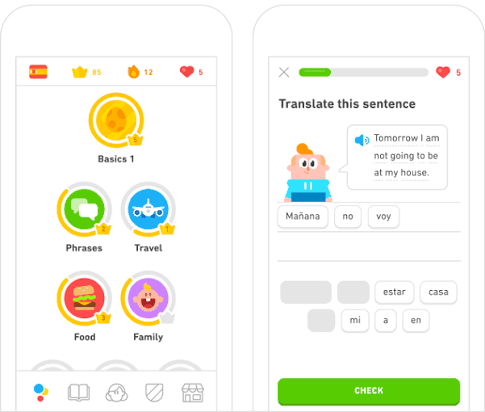
Once Duolingo gives users a reason to return and reminds them to do it, the final piece is removing friction from the experience.
The app is free, available on mobile, and designed around short lessons that users can fit into their day. A user does not need to dedicate an hour to language study. They can open the app, complete a lesson, preserve their streak, and move on. Even the advertising is positioned at the end of lessons, rather than interrupting the practice itself.
That matters because every extra step gives a customer another opportunity to put something off. Duolingo keeps the path from opening the app to completing a lesson simple.
The Takeaway
Duolingo's retention strategy works because each part supports the next. The streak gives users something to protect, personalized notifications bring them back when they are at risk of leaving, and a low-friction product makes it easy to complete the action once they arrive.
For businesses, the lesson extends beyond gamification. If you want customers to develop a habit around your product, give them something worth returning to, learn what actually brings them back, and make the action you want them to take as easy as possible.