


Waiting is one of the most frustrating parts of buying something. After placing an order, customers are often left wondering what is happening behind the scenes, how much longer they have to wait, and whether everything is going according to plan. Businesses can’t always eliminate that uncertainty by making their products or services arrive faster. Domino’s found another way to address it.
In 2008, Domino’s introduced Pizza Tracker, a feature that allowed customers to follow their orders from preparation to baking and eventually to delivery. Rather than leaving customers to guess what was happening, Domino’s made the process visible.
The Tracker eventually became a defining part of the company’s digital ordering experience. By March 2026, it had tracked more than 2.5 billion orders. Domino’s turned an ordinary part of the customer journey into something customers could actively follow, changing how they experienced the time between placing an order and receiving it.
Give Customers Visibility Into What Happens After They Buy
Customers often have questions after making a purchase, but businesses don’t always give them a way to find the answers. Once someone places an order, schedules a service, or pays for a project, they may have little information about what happens next. That leaves them waiting for updates or contacting the business themselves.
Domino’s recognized an opportunity to make that process more transparent.
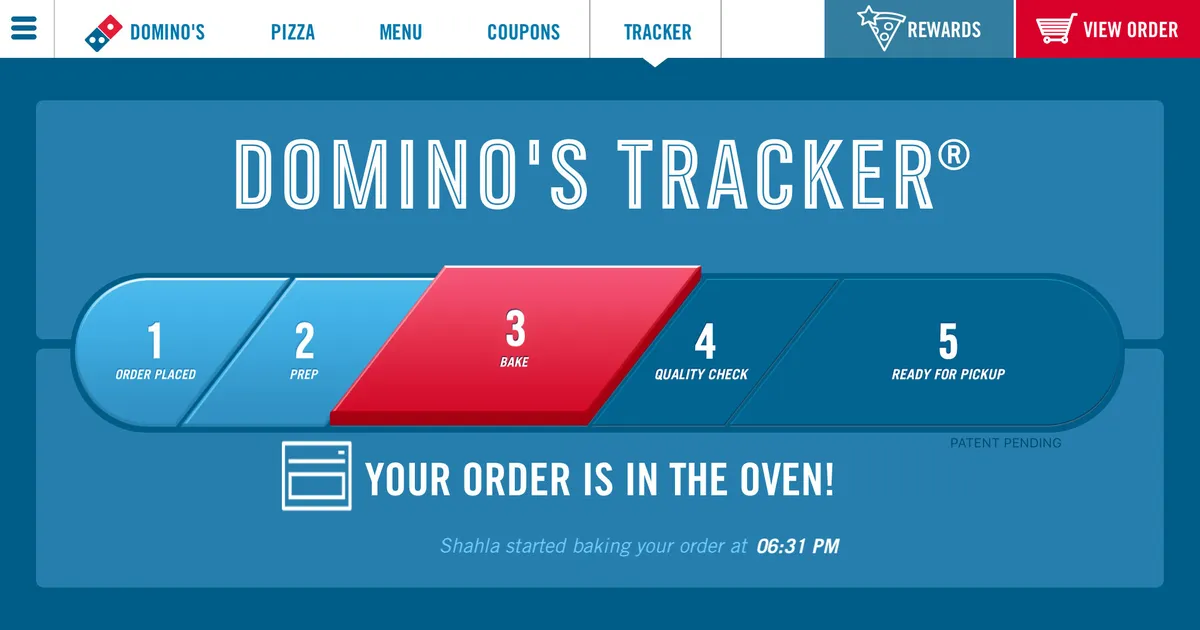
When Domino’s introduced Pizza Tracker in January 2008, customers could follow their orders through several stages, including preparation, baking, and dispatch. The feature initially launched across more than 3,200 U.S. locations using the company’s Domino’s Pulse store system.
This changed what customers could see after ordering. Instead of relying entirely on an estimated delivery time, they could check the progress of their pizza and see which stage it had reached. Domino’s was providing information that customers previously had little access to without contacting the restaurant.
That distinction matters because customers don’t necessarily need a business to complete every task instantly. They also need to understand what is happening while they wait. When a company provides clear updates, customers have more information to plan around and fewer reasons to wonder whether their order is being handled.
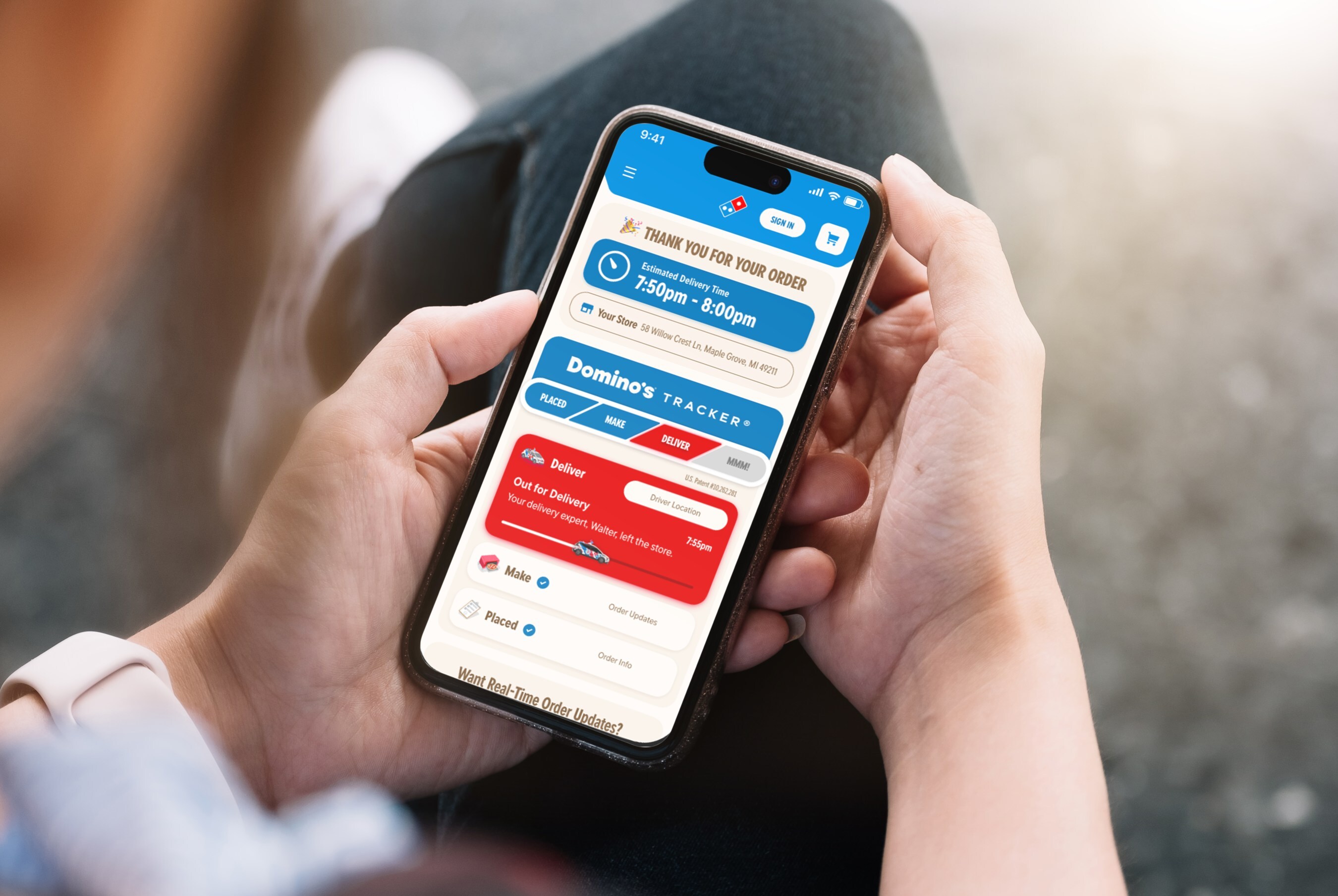
The Tracker also gave customers a way to check their orders without having to call the restaurant. Instead of requiring an employee to answer individual questions about order status, Domino’s gave customers access to that information directly.
This made the experience more convenient for both sides. Customers could get updates themselves, while employees could spend less time responding to basic status inquiries. The feature turned communication into a built-in part of the ordering process rather than something customers had to request.
Together, these examples show that the customer experience doesn’t end when someone pays. The time afterward can shape how people feel about the purchase, particularly when they don’t know what is happening. Domino’s addressed that problem by making its process visible.
For businesses, the same opportunity exists whenever customers are left waiting for information. A contractor could provide project milestones, a repair shop could show whether a vehicle is awaiting parts or undergoing repairs, and a consultant could send regular progress updates. The product itself might not change, but customers would have a clearer understanding of what they are paying for and what happens next.
Turn an Ordinary Process Into Part of the Experience
Providing information is useful, but Domino’s also made the act of following an order part of the customer experience. Instead of treating the time between ordering and delivery as an inconvenience customers simply had to tolerate, the company gave them something to interact with while they waited.
That made tracking more than a basic status update.
The Tracker organized the ordering process into recognizable stages. Customers could see when their pizza was being prepared, when it entered the oven, and when it moved closer to delivery.
Each stage gave customers a clearer sense of progress. Rather than receiving a single estimate and waiting for it to expire, they could return to the Tracker and see how the order was advancing.
This mattered because the customer experience includes more than the final product. People also experience the process of getting it. When that process is confusing or invisible, even an otherwise satisfactory purchase can feel frustrating. By making progress visible, Domino’s gave customers another reason to engage with the ordering experience.
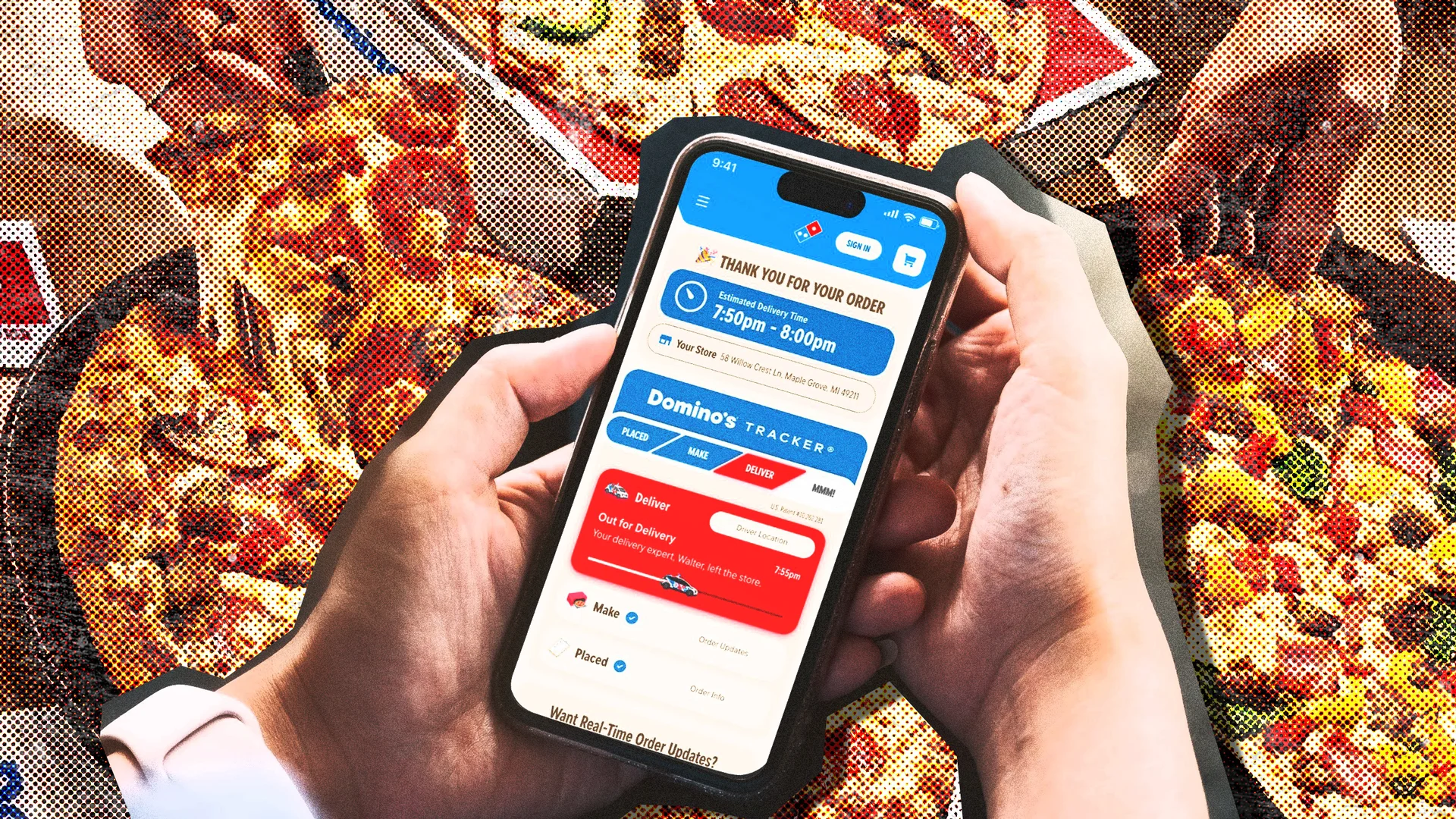
Domino’s also made the Tracker more entertaining. The company experimented with different Tracker themes, sounds, and personalities, giving the feature a recognizable identity beyond simply displaying order information.
That added another dimension to the experience. Tracking a pizza could be something customers checked out of curiosity rather than something they used only when they were concerned about a delay. Domino’s turned a functional tool into a familiar part of its digital product.
The distinction is useful for businesses thinking about customer experience. Not every interaction needs to be entertaining, and adding unnecessary features can make a product more complicated. But when a customer must repeatedly interact with a process, making that process clearer and more engaging can improve the overall experience without changing the core service.
The Tracker also gave customers a way to stay connected to their purchase without having to take action themselves. They could check their order when they wanted, rather than repeatedly contacting the restaurant for information.
That convenience helped make the experience feel more customer-friendly. Domino’s was not asking customers to learn a complicated system or complete additional tasks. It was giving them an easy way to access information they already wanted.
Together, these examples show how an ordinary operational process can become part of a company’s customer experience. Domino’s didn’t need to turn making and delivering pizza into something fundamentally different. It made the existing process easier to follow and more engaging for customers.
For founders, the lesson is to examine the parts of the customer journey that people usually tolerate rather than enjoy. An onboarding process, a service appointment, or a delivery timeline might seem like routine operations inside the business. From the customer’s perspective, however, those moments are part of the product. Improving them can create a competitive advantage even when the core offering remains the same.
Keep Improving the Experience as Customer Expectations Change
Customer expectations change as technology makes new forms of convenience possible. A feature that once felt innovative can eventually become something customers expect from any business they use. Domino’s continued developing Pizza Tracker instead of treating its original launch as the end of the process.
The company kept looking for ways to make tracking more useful, accurate, and accessible.
In 2023, Domino’s reported that Pizza Tracker had tracked more than 1.8 billion orders since its introduction. By March 2026, the company reported that the total had surpassed 2.5 billion.
Those figures demonstrate how extensively the feature has been used over time. They don’t independently establish how much the Tracker increased sales or customer loyalty, but they show that it remained a substantial part of the company’s ordering experience long after its initial launch.
Its continued use also gave Domino’s a reason to keep refining the feature. The original idea of showing customers their order’s progress remained relevant, even as the technology and expectations surrounding digital ordering changed.
In March 2026, Domino’s announced further improvements to its Tracker, including AI-powered ready-time estimates, live order updates on iPhone lock screens, clearer order statuses, and GPS tracking for delivery drivers.
These updates address different parts of the same customer problem. More precise estimates help customers plan around delivery, live updates reduce the need to repeatedly open the app, and GPS tracking provides additional visibility into the delivery process.
The important point is that Domino’s continued building around what customers wanted to know. The technology changed, but the underlying need remained consistent: customers wanted a clearer picture of when their order would arrive and what was happening along the way.
Businesses can apply the same thinking without building a sophisticated tracking platform. The first step is to identify the questions customers repeatedly ask after making a purchase. If customers frequently ask when a project will be finished, whether an order has shipped, or when a repair will be ready, those questions reveal where communication may be missing.
A business can then introduce updates that address those questions directly. That might mean an automatic confirmation email, a weekly project summary, a text message when an order enters production, or a notification when a service appointment is approaching.
The system doesn’t have to be complicated. It needs to give customers useful information at the moments when they are most likely to need it.
Domino’s continued development of Pizza Tracker shows that customer communication is not a one-time improvement. As expectations change, businesses need to reconsider whether the information they provide is still sufficient. The goal is to keep customers informed without overwhelming them with messages that don’t add value.
For smaller businesses, this means treating communication as part of the service rather than an afterthought. Customers should not have to repeatedly ask for information that the business could reasonably provide on its own. Proactive updates can make the experience easier to manage for customers while helping businesses identify and resolve problems sooner.
Main Takeaway
Domino’s turned waiting into a feature by giving customers visibility into a process they previously couldn’t see. Pizza Tracker made it easier to follow an order, turned progress updates into part of the experience, and continued evolving as customers gained access to better digital tools.
Together, these decisions show that improving customer experience doesn’t always require delivering a product faster or changing what the business sells. Sometimes the opportunity lies in improving everything that happens between the purchase and the final result.
For businesses, the lesson is to look beyond the moment a customer buys. Consider what they are left wondering afterward, then find ways to answer those questions before they have to ask. Clear timelines, progress updates, and proactive communication can reduce uncertainty and give customers more confidence in your business.
You may not be able to eliminate the wait, but you can make the experience of waiting better.
Looking Ahead
As customers become accustomed to real-time updates across delivery apps, online shopping, and digital services, transparency may become less of a differentiator and more of an expectation. Businesses that provide little information after a sale could find themselves creating unnecessary frustration, even when their products and services are reliable.
That doesn’t mean every small business needs to build its own version of Pizza Tracker. The more useful lesson is to identify where customers lose visibility and address that gap with the simplest solution that works.
For some businesses, that could mean automated notifications. For others, it could be a shared project timeline or a quick message explaining what happens next. The technology matters less than whether the customer receives the information they need.
Domino’s showed that the experience doesn’t have to stop while the customer waits. For businesses willing to rethink that part of the journey, the time between a purchase and its completion can become another opportunity to earn trust.