



Intro

For years, software pricing was pretty straightforward. You paid a monthly subscription, used the products as much as you wanted, and the company collected predictable revenue.
AI is changing that.
Unlike traditional software, every AI request costs the company money. One customer might use an AI tool five times a week, while another uses it 5 times a day.Suddenly, charging everyone the same price becomes a lot more complicated.
As more businesses build AI products, they realize that pricing isn't just a finance decision, it's becoming a competitive advantage.
Not every customer uses AI the same way
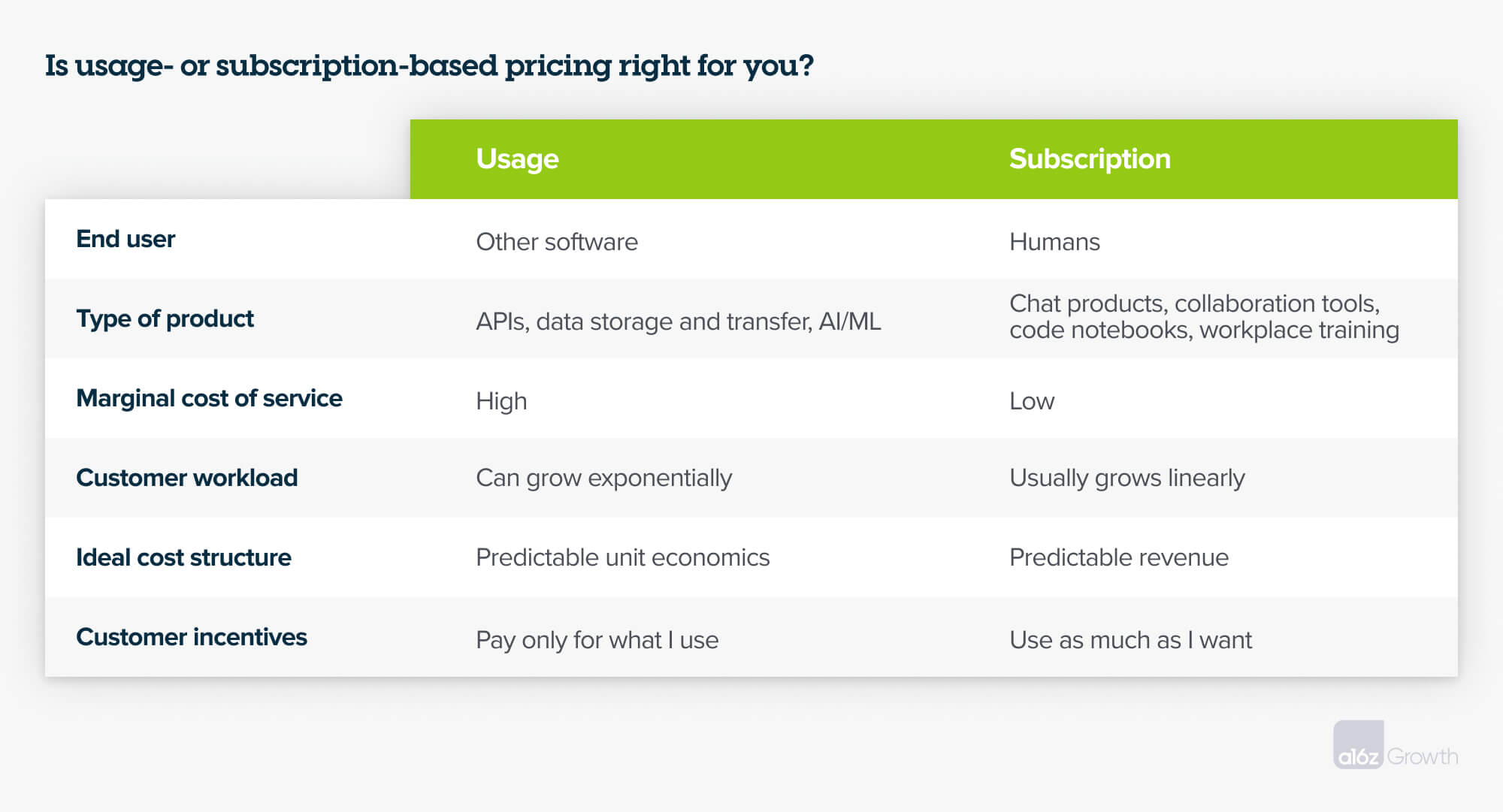
The best pricing model matches the way customers actually use a product.
With traditional software, a flat monthly subscription usually works because every customer costs basically the same amount to support. AI is different. Heavy users cost companies much more than occasional users, even if they're paying the exact same price.
That's why more AI companies are experimenting with usage based pricing. Which is where customers pay based on how much they actually use the product.
The goal isn't simply to charge more. It's to make pricing feel fair for both the business and the customer.
Customers like surprises, just not on their bill

Paying for what you use sounds fair, but it creates another problem. People don't always know what they'll owe at the end of the month.
If customers worry that every prompt increases their bill, they may stop using the product altogether.
That's why many companies are moving towards hybrid pricing. Customers pay a predictable monthly subscription that includes a certain amount of AI usage.They then pay extra only if they go beyond that limit.
Good pricing shouldn't make customers afraid to use your product. It should give them confidence to keep coming back.
People pay for results, not technology
Most customers don't care about how advanced your AI model is. They care whether it actually solves a problem.
That's why some companies are starting to charge based on outcomes instead of access alone. Rather than paying just to use the software, customers pay when the AI delivers measurable value.
It's a simple reminder for founders. Don't price your technology, price the value it creates.
Take away
There's no perfect pricing model for every AI company. The challenges are finding a balance between covering the real cost of AI, giving customers predictable pricing, and making sure people feel they're paying for value, not just access.
Looking ahead
Pricing will become one of the biggest ways AI companies stand out. Plenty of businesses can build powerful AI tools. The companies that win long-term will be the ones that make those tools feel affordable, predictable, and worth paying for.