



Building Tough Startups Beats Easy Wins
The easiest business to start is usually the easiest business to copy.
That's why some of the strongest companies choose the harder path from the very beginning. While it's tempting to launch quickly, doing the difficult work that competitors avoid can create an advantage that lasts for years.
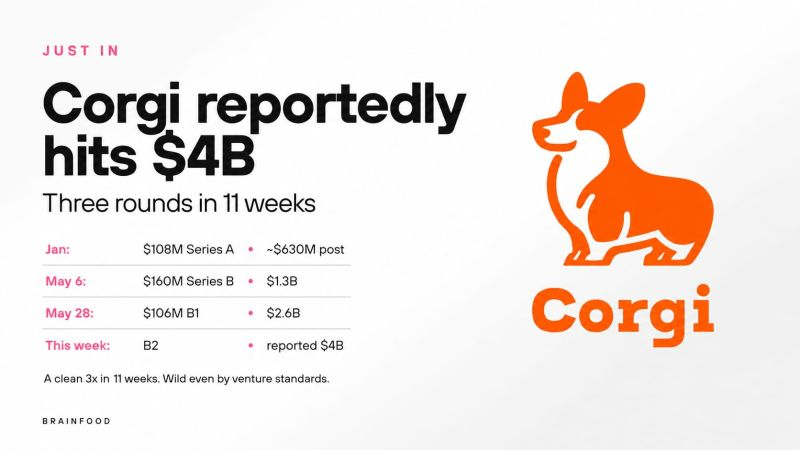
AI insurance start up company Corgi is a good example. Instead of staying an insurance broker, a much simpler business model, the company worked to become a licensed insurance carrier. It was a slower and more complicated path, but one that made the business much harder to replicate.
Sometimes the Hard Way is the Smart Way
Not every obstacle is a disadvantage. Sometimes it's exactly what protects your business.

By becoming a licensed insurance carrier, Corgi gains the ability to manage underwriting, policies, and claims itself instead of relying on outside insurance companies. That also meant navigating regulations and approvals that many competitors would rather avoid.
For founders, that's an important lesson… The work that feels slow today can become the reason competitors struggle to catch up tomorrow.
Being First Isn’t Enough
Launching quickly can help a start up get noticed. Staying ahead is a different challenge.
That's becoming especially true in AI. Building an AI product is easier than ever, which also means it's easier for competitors to build something similar. A sleek website or chat bot isn't much of a competitive advantage if someone else can re-create it in a few weeks.
What competitors can't copy as easily are things like proprietary data, customer relations, regulatory approvals, and deep industry expertise.
These are the kinds of advantages that tend to last.
15 Best Business Plan Competitions for Startup Entrepreneursby Marcia Layton Turner Many members of the WomensNet community have asked us about more opportunities to get start-up money. Well, here’s an idea that might help you. Business plan creation is an exercise required of many MBA students, as a teaching tool, which is why many colleges and universities sponsor business plan competitions – to […]WomensNet | Grants for Women in Business | Small Business Grants • am_adminGreat Companies Think Years Ahead
The strongest businesses aren't built overnight.
Research on successful founders consistently points to traits like perseverance, curiosity, and resilience. That's because meaningful advantages often take years to build, long before customers or investors fully recognize their value.
Corgi spent its early years building a foundation that couldn't be created overnight. That long-term approach helped position the company for rapid growth once those pieces were finally in place.
For entrepreneurs, patience isn't just a personality trait. It can become part of the business strategy.
The Critical Role of CEO Thought Leadership in Driving Business Success In a dynamic business landscape, CEO thought leadership is essential for success. As brand ambassadors, CEOs shape consumer trust, investor confidence and employee loyalty, with their personal reputation and strategic visibility directly influencing financial performance, innovation and brand identity.apcoworldwide.com/blog/the-critical-role-of-ceo-thought-leadership-in-driving-business-successTakeaway
Starting quickly can help you enter the market, but building something that's difficult to copy is what helps you stay there.
The companies that last aren't always the ones that launch first. They're often the ones willing to do the difficult work that creates an advantage competitors can't easily recreate.
Looking Ahead
One of the best business questions every founder can ask is, " if my business succeeds how easy would it be for someone else to copy it?” The harder that answer is, the stronger that business is likely to become.