


Two AI travel startups ended up building their businesses under the exact same name, Soar.
Stanley Virgint launched his AI travel assistant, Soar, in December 2024. Then, in May 2025, Henry Langmack and Alex Slater launched an AI flight booking startup with the same name. Since both companies operated in AI and travel and even used similar airplane related branding, the overlap quickly became a problem.
The situation shows why choosing a business name isn’t just about finding something that sounds good. Before building a brand around a name, make sure you can actually make it yours.
Make Sure Your Name Is Yours
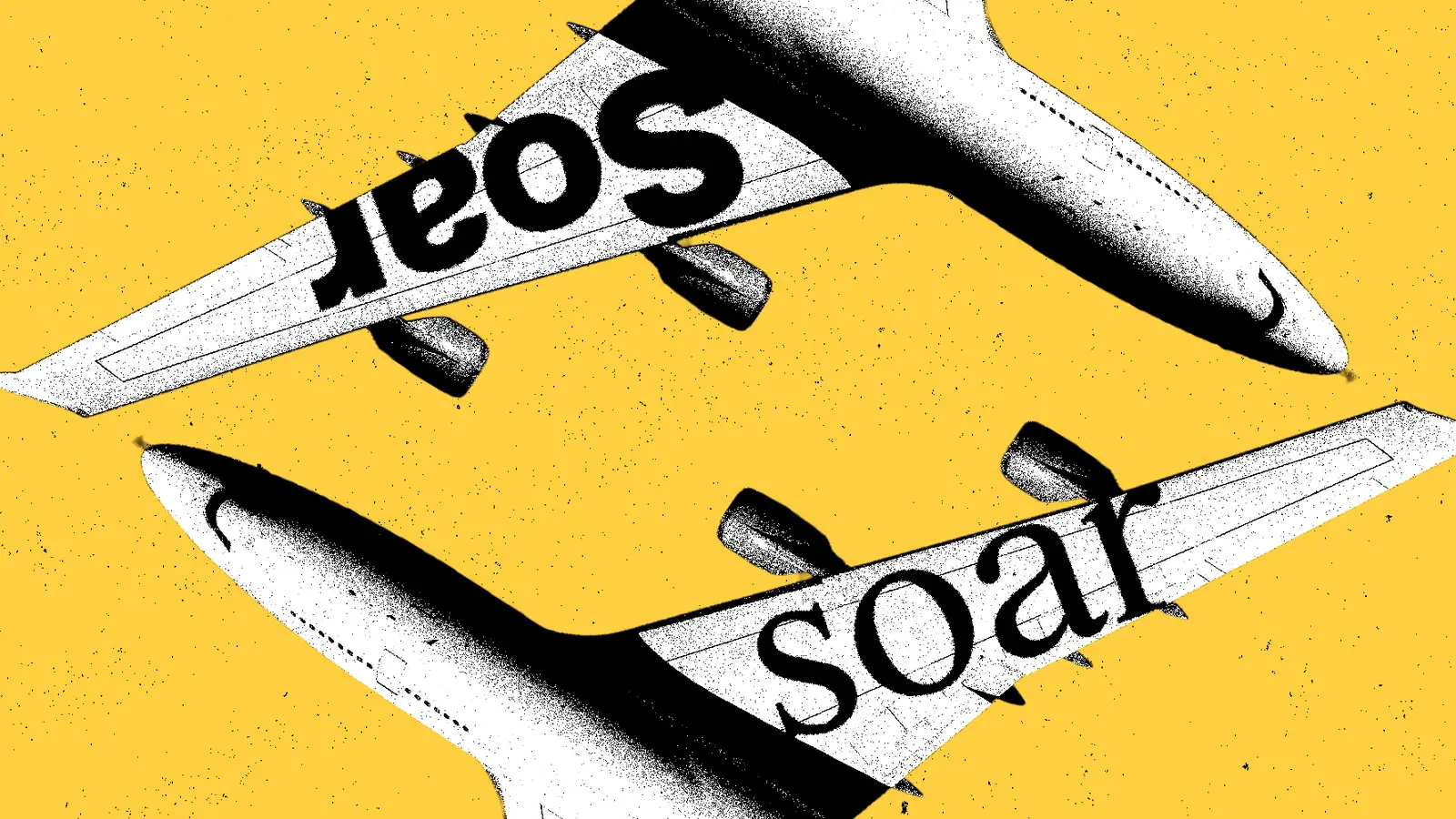
The two Soars weren’t offering exactly the same product, but they were close enough to create a problem. Both were AI startups operating within the travel industry, and both were trying to build recognition around the same name.
That’s why checking a name before committing to it matters.
Drew Beechler, who has helped name more than 30 startups, describes “ownability” as one of the first things founders should consider. That means looking at trademarks, available domains, search results, and other businesses already using the name.
A name might sound perfect, but that doesn’t mean it’s available to build a brand around. Before investing in a name, find out who else already has a claim to it.
A Similar Name Can Confuse More Than Customers
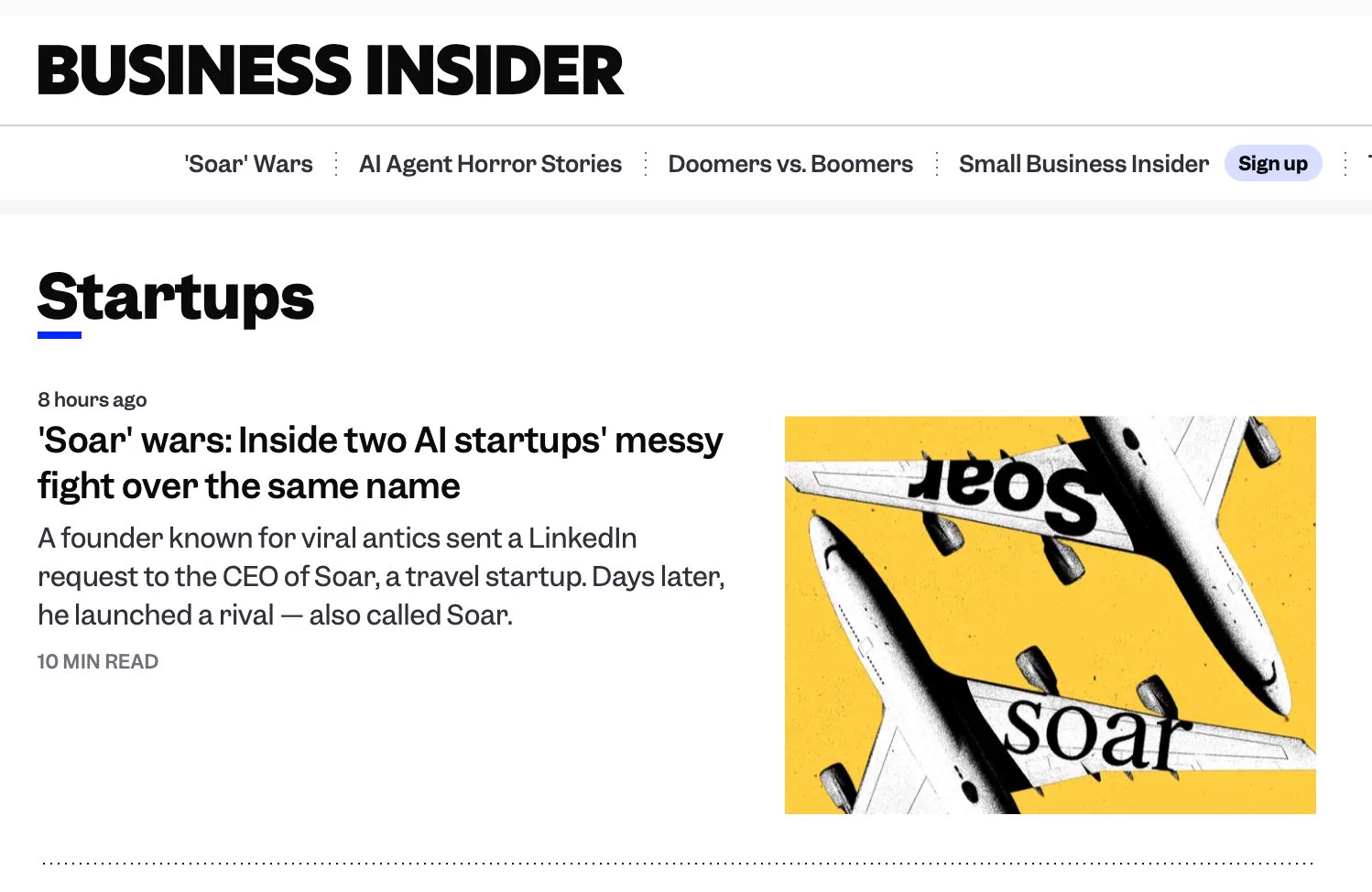
The shared name eventually started creating real confusion.
Virgint reportedly received customer support messages meant for the other Soar. But customers weren’t the only people getting the companies mixed up.
An investor contacted Virgint about potentially investing and later sent him the other Soar, asking whether the two companies were different. There was reportedly confusion involving a flight vendor as well.
That creates a bigger problem than an occasional mistaken email. When a company earns attention, referrals, or recognition, people should immediately know which business they’re dealing with.
A brand name should make a company easier to recognize. If people regularly confuse it with someone else, some of the recognition you’ve worked to build can lose its value.
Fix Naming Problems Before the Brand Gets Bigger
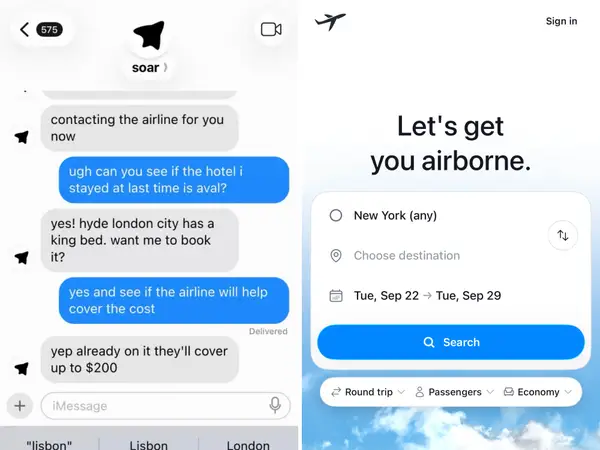
The two startups argued over the Soar name for months, including questions about who used it first, trademark applications, and whether customers were actually being confused.
Eventually, Langmack and Slater decided to rebrand their startup rather than continue fighting over the name.
That’s the type of problem that’s much easier to deal with before a company has spent months or years building recognition. Beechler says startups he’s worked with have faced trademark conflicts where renaming ultimately became easier and cheaper than continuing the legal fight.
Changing a name later can also mean changing websites, branding, marketing materials, and giving up some of the recognition customers already associate with the old name.
The best time to find a naming problem is before customers know your name, not after you’ve built a business around it.
Takeaway
The Soar dispute shows how something as simple as a shared name can eventually affect customers, investors, vendors, and the brand itself.
Before spending time and money building recognition, check competitors, trademarks, domains, and search results to make sure the name is distinct enough to belong to your business.
A few searches early on can be much easier than rebuilding the brand later.