


Most failed businesses eventually give their founders a clear reason to quit. Brent Franson's company, Most Days, had the opposite problem. It worked just well enough to keep him going.
Franson spent four years building Most Days, a mental health and habit-tracking app. People used the product and liked it, and the company had raised around $10 million. From the outside, those looked like signs that the business was working. The problem was that Most Days could not acquire customers cheaply enough to become a sustainable business.
Franson eventually shut the company down and described the situation as "slow failure." The company was not collapsing, but it also was not becoming the business he needed it to become. That makes Most Days an example of a problem many founders face: sometimes the hardest business to quit is the one that gives you just enough evidence to believe you should keep trying.
A Product Can Work Without the Business Working
A product getting positive feedback is useful, but it does not prove that the business behind it is sustainable. Founders eventually need to move beyond asking whether customers like the product and determine whether the company can consistently reach those customers at a cost the business can support.
Most Days had genuine product validation. Franson spent years developing the app, and users continued to use it. The company also attracted significant investment, reporting that it had raised approximately $10 million, much of it before launch. Those signals made the company difficult to dismiss. There was clearly something people valued about the product.

The problem was that customer interest did not solve the company's acquisition economics. Franson eventually recognized that Most Days could not acquire customers cheaply enough to become a sustainable business. The product could provide value to users while the company still struggled to build a viable path to growth.
That distinction is important for any founder. A customer saying they love your product tells you that the product has value. It does not tell you whether you can reach thousands of similar customers at a cost the business can afford. A company can have satisfied customers and still lack a sustainable business model.
For Most Days, the product was not necessarily the problem. The larger issue was whether the company had found a repeatable way to turn that product value into sustainable growth.
The Small Wins Made the Problem Harder to See
Once a product shows signs of working, founders naturally look for ways to improve it. That persistence can be valuable when each experiment moves the business closer to sustainability. It becomes dangerous when small improvements keep distracting from a problem that never actually goes away.
Most Days had enough positive signals to make quitting difficult. It had users, funding, and a product people liked. Every one of those facts created another reason to believe the business might still work with the right adjustment. Maybe the marketing needed to change. Maybe the product needed another feature. Maybe customer retention could improve. Maybe the company simply needed more time.
Each possibility could sound reasonable on its own. The problem is what happens when a founder can always find another reasonable explanation for why the business has not worked yet.
That is what Franson means by "slow failure." The business survives because there are enough positive signals to make quitting feel premature. But those signals can distract from the more important question: is the company actually getting closer to becoming sustainable?
There is also an opportunity cost to continuing. Four years spent trying to make Most Days work were four years that Franson could not spend building something else. The cost of continuing was therefore not limited to the company's financial resources. It also included his time, attention, and energy.
Small wins should tell you something about the business. They should not automatically become a reason to ignore a larger problem that has remained unresolved.
Eventually, You Have to Let the Evidence Change Your Mind
The longer a founder works on an idea, the harder it can become to admit that the original strategy is not working. One way to avoid that trap is to decide what evidence would justify continuing and what evidence would justify changing direction.

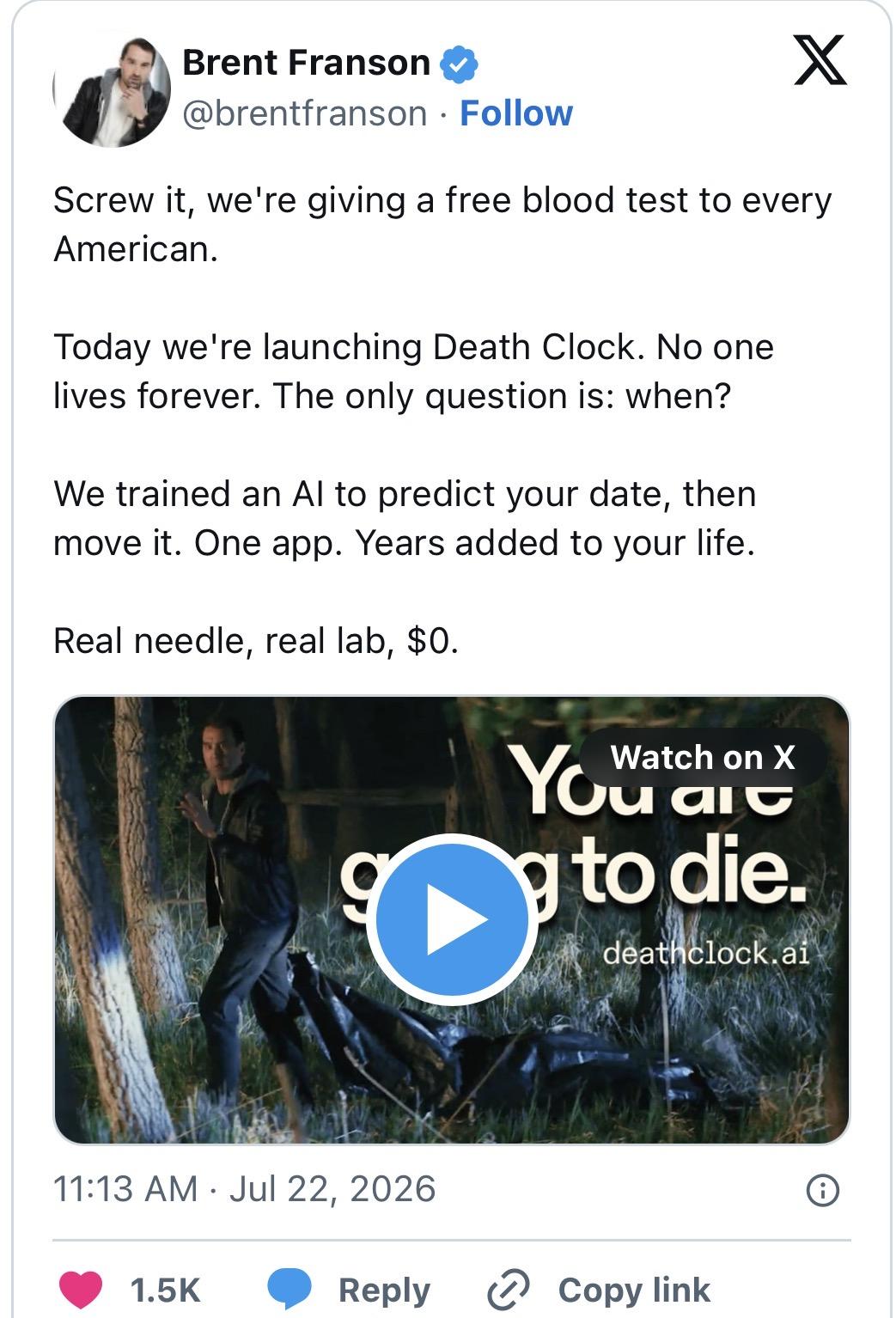
Franson eventually reached that point with Most Days. In late 2024, he shut the company down and abandoned the codebase his team had spent years building. Instead of continuing to make incremental changes to the same product, the company moved in a completely different direction with Death Clock, an AI-powered longevity product.

The early response gave the team a very different market signal. According to Inc., an early version of Death Clock unexpectedly reached No. 1 in a dozen countries. That did not automatically prove the new business would succeed, but it gave the team evidence of significant market interest.
The important part is the willingness to follow the evidence. Franson did not continue investing in Most Days simply because the team had already spent years building it. The work they had already done did not become a reason to keep pursuing the same strategy.
Founders can apply the same idea before they reach that point. Set specific expectations for customer acquisition, retention, revenue, or whatever metrics determine whether your business is actually working. Then decide what results would cause you to keep going and what results would force you to reconsider the strategy.
Without those standards, almost any positive signal can become an excuse to continue.
The Real Danger of Slow Failure
Most Days was difficult to quit because it was not an obvious failure. People liked the product. Investors had backed it. The team had spent years building it. Those successes made it reasonable to keep trying, but they also made it easier to overlook the fact that the business still could not acquire customers sustainably.
That is what makes slow failure dangerous. A completely broken business forces a decision. A business that works just enough can keep giving you reasons to wait another month, build another feature, try another strategy, or invest another year.
For founders, the lesson is to separate product validation from business validation. A product can be useful without the company behind it being sustainable. Small wins can provide valuable information without proving that the overall strategy works. Most importantly, founders need clear criteria that tell them when persistence is still productive and when it has become rationalization.
Persistence makes sense when the evidence shows you are getting closer. When the same fundamental problem survives every attempt to fix it, continuing indefinitely can become more expensive than changing direction.
Looking Ahead
As launching and testing new businesses becomes faster and cheaper, founders have more opportunities to test their assumptions before committing years of resources. The founders who can recognize when the evidence has changed may be able to avoid getting trapped in a business that is never failing badly enough to make the decision obvious.