



Hims & Hers (Hims) grew into one of the biggest telehealth companies by making healthcare simple and affordable. But after lawsuits, privacy concerns, and changing regulations, the company lost billions in value almost overnight. The story shows why fast growth has to be backed by customer trust and legal compliance, not just clever marketing.
Building a fast-growing company and building a trustworthy one aren't automatically the same project, even when they look identical from the outside for a while. Hims spent years proving how fast the first one can happen, but this past summer showed just how quickly the second one can catch up to you.
Context
Hims & Hers built its business on a simple pitch: skip the doctor's office, fill out an online form, get a prescription delivered to your door. It's a real telehealth company, matching customers with licensed providers for conditions like hair loss, erectile dysfunction, and weight loss, and it grew fast by making that process feel effortless and affordable.
Starting in 2025, that growth started running into resistance from multiple directions at once. Regulators, lawmakers, and a former pharmaceutical partner all raised concerns about different parts of how Hims operated, and each one seemed to chip away at a piece of the trust the company had built its brand on.
Fast Growth Means Little Without Trust and Compliance
A company can grow its user base quickly and still end up building on a weak foundation if trust and compliance aren't really part of that growth. Hims is a pretty direct example of what that gap can eventually cost.
The clearest case came on July 29, 2026, when it was reported that the FTC, joined by California and Utah, sued Hims directly. The complaint alleges the company shared customers' sensitive health information with advertising platforms like Meta and Snap through tracking tools on its site, despite telling customers their information was protected. That's the kind of allegation that lands right at the core of what a healthcare company is generally expected to guard most carefully.
The same lawsuit alleges a second, separate problem: Hims charged customers for prescriptions almost immediately after they submitted an intake form, often before a provider had reviewed their case, even though the company told customers they'd get to consult with a provider first. Regulators also say subscriptions were made harder to cancel than they were to start. Billing and privacy are different parts of the business, but both allegations seem to point to a similar pattern, customers being told one thing and experiencing another.
The market's reaction suggests how much that pattern can cost once it becomes public. Hims stock dropped roughly 10% the day the lawsuit was filed, with investors appearing to price in more than legal fees, likely also the risk that customers stop trusting a healthcare company with their most private information.
These three moments point to the same underlying issue: fast growth doesn't look like the actual risk in any of this. The real risk was building that growth on promises the company wasn't fully keeping, and that difference got expensive fast once regulators and investors both noticed it at the same time.
Building a Business Around Temporary Opportunities Is Risky

Some growth strategies depend on conditions a company doesn't actually control, like a shortage, a regulatory gap, or a temporary rule. Those tend to work great right up until the conditions shift, and Hims found itself building on exactly that kind of ground.
Hims found an interesting opportunity in the Wegovy shortage. When the branded weight-loss drug was hard to get, federal rules allowed compounding pharmacies to make custom versions to fill the gap, and Hims built a significant part of its business around offering cheaper, custom-made alternatives. It drove real growth for the company at a time when demand for GLP-1 drugs was exploding.
The catch was that the opportunity existed specifically because of a temporary supply problem. Once regulators determined the Wegovy shortage had ended in 2025, compounding pharmacies became legally restricted from making unapproved versions of the drug, with only narrow exceptions remaining. The advantage that had fueled a chunk of Hims' growth disappeared almost as fast as the shortage that created it did.
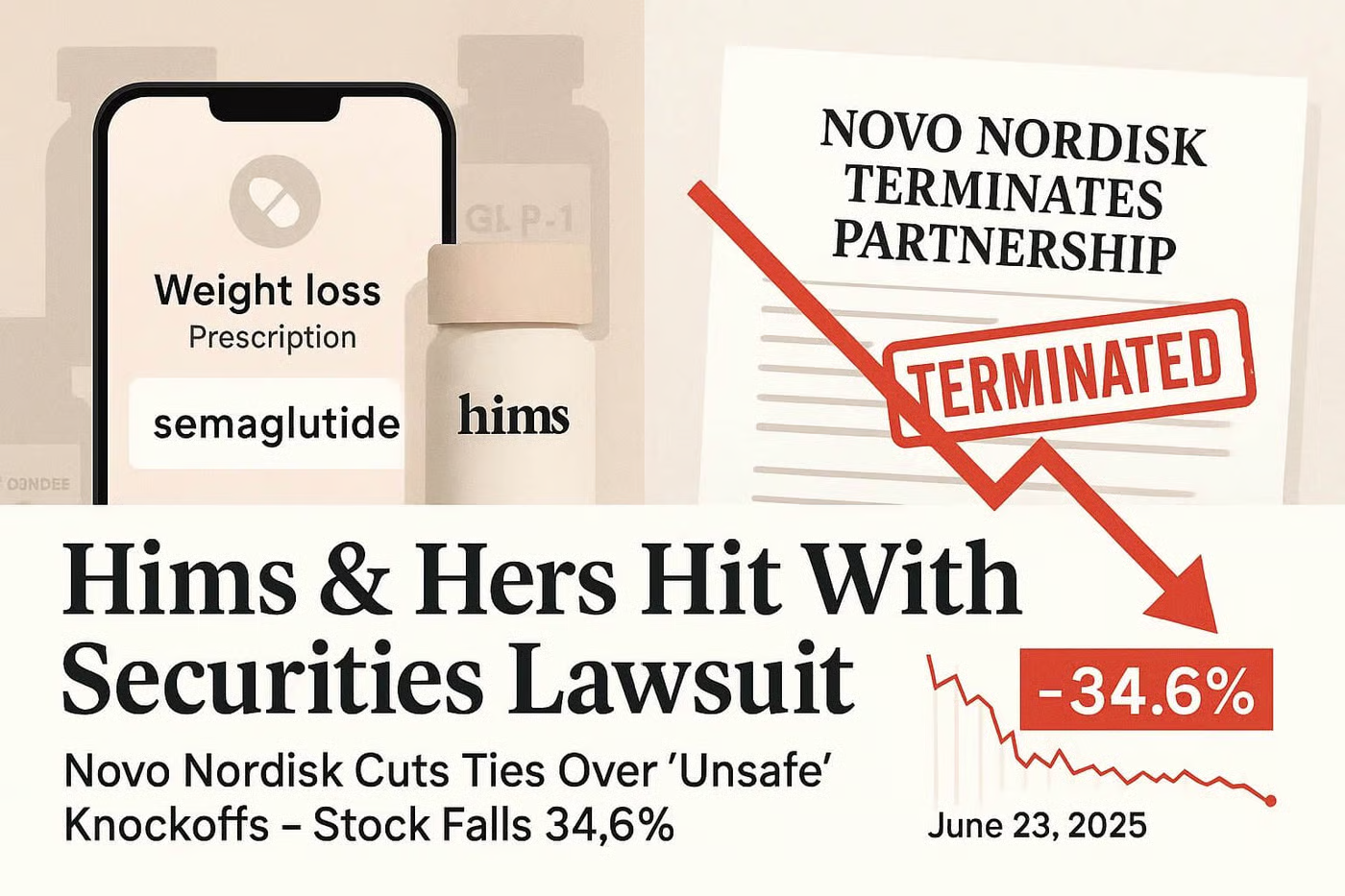
Novo Nordisk's response turned a quiet business shift into a much louder one. In June 2025, the company ended its partnership with Hims entirely, publicly accusing it of deceptively marketing and selling knockoff versions of its drug. Hims stock dropped more than 33% in a single day on that announcement, a sharper one-day reaction than even the FTC lawsuit would trigger more than a year later.
Put these three pieces together, and the lesson has less to do with weight-loss drugs specifically, and more to do with what happens when a meaningful piece of a company's growth depends on conditions it doesn't control.
Sustainable Growth Requires Strong Systems, Not Just Fast Marketing
Marketing can get a company noticed quickly. Whether that attention holds up usually depends on what's happening behind the scenes, not on the ads themselves.
Hims leaned hard into big, attention-grabbing campaigns, and one of the clearest examples is its promoting its compounded weight-loss drugs. The ad was almost immediately criticized by health experts, a pharmaceutical industry group, and two U.S. senators for touting the drug's benefits while leaving out side effects or safety disclaimers. FDA Commissioner Marty Makary later cited the ad directly as an example of the kind of misleading pharmaceutical advertising the industry needed to be reined in on.
That wasn't a one-time misstep, either. Later that year, the FDA sent Hims a direct warning to stop making false or misleading claims about its compounded GLP-1 offering, part of a broader wave of warning letters the agency was sending to telehealth companies over how they marketed compounded drugs. Getting a Super Bowl slot approved moves fast. Getting compliant with federal drug-advertising rules doesn't seem to move at the same speed, and at Hims, the marketing side got there first.
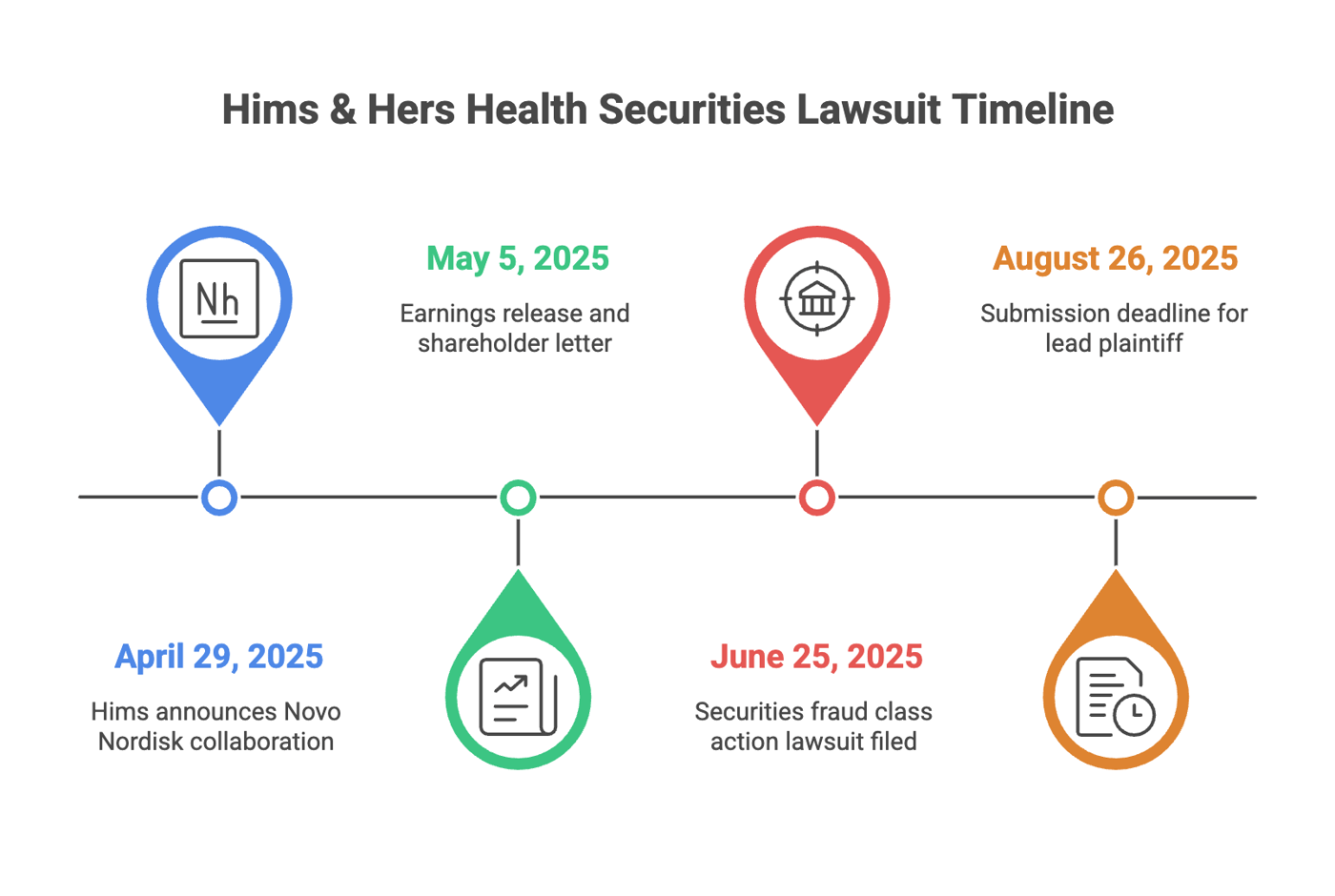
Investors noticed the same gap from their own angle. A securities class action was filed against Hims covering the period between April and June 2025, alleging the company made misleading statements to investors during roughly the same stretch its GLP-1 marketing and regulatory issues were unfolding. Marketing that outpaces what a company can actually stand behind tends to create two problems at once: one for customers, and one for shareholders.
These three pieces of evidence all seem to trace back to the same root cause: Hims built a marketing engine that scaled faster than its compliance and operational systems ever caught up to. Once regulators and investors both started paying attention, that discrepancy became very public, very quickly.
Main Takeaway
This whole story reads like a case study in how growing fast and growing sustainably can be two different achievements, even when a company seems to be doing both at once for a while.
Hims built a genuinely useful product and grew it faster than almost any telehealth company before it. It also built parts of that growth on promises it wasn't fully keeping, market conditions that were never going to last, and marketing that outran its own compliance systems, and all three of those caught up with the company within about a year and a half of each other. That's the throughline back to the opening: the fast growth doesn't look like it was ever really the problem. What it was built on top of does.
For businesses more broadly, the lesson scales down easily. Growing quickly can create huge opportunities, but long-term success still depends on earning customer trust, following the rules that apply to your industry, and building a business that can keep growing even after the market shifts underneath it.
Looking ahead, what happens next for Hims probably comes down to whether the company treats this as a wake-up call or a PR problem to manage. The company has pushed back hard on the FTC's claims, but the regulatory and financial pressure isn't likely to ease until customers, and investors, believe the underlying systems have actually changed.