



Intro
Every major tech shift comes with the same tricky balancing act: spend enough to stay ahead, but not so much that you're gambling before the payoff is clear. AI has turned into one of the biggest bets in tech history, with companies pouring billions into the infrastructure they believe will power what's next.
Meta is at the center of that bet, planning to spend up to $145 billion on AI, one of the largest single investments any tech company has ever made. What that number actually buys, and whether it pays off, is a different story.
The price tag is only the beginning
Big investments create an easy assumption: more spending means better results. But there's often a gap between the size of a number and what it's actually doing for a company.
Meta recently raised its 2026 capital spending forecast to between $125 billion and $145 billion, making it one of the largest AI spending programs ever announced. Investors weren't fully convinced. Even after a strong earnings report, Meta's stock dropped as the company struggled to show what it was getting for the money. Zuckerberg has also admitted Meta underestimated how much computing power AI would need, which helps explain why the number keeps climbing.
None of this means the spending is a mistake. It just shows that the price tag alone doesn't reveal the full picture about whether it'll be worth it.
Infrastructure is an investment, not just an expense
Some investments aren't built for immediate returns. Laying the groundwork for new technology can take years, especially when the biggest opportunities haven't even been figured out yet.
It's tempting to look at Meta's numbers and assume it's just burning cash. But most of that spending is going toward the infrastructure AI runs on: data centers, GPUs, networking, memory chips, and computing capacity. Blackstone alone has committed over $100 billion to data centers, which says a lot about how much the broader industry is betting on this. Meta's approach seems to be embedding AI across Facebook, Instagram, WhatsApp, its ad business, and its wearables, rather than chasing a fast payday.
Meta isn't alone, either. Microsoft, Google, and Amazon have all ramped up their own AI spending, and the competition seems to be shifting from building AI tools to building the infrastructure to run them at scale.
The best investment is the one customers actually feel
For companies pouring billions into AI, the real test is whether people notice. The most effective investments tend to be the ones that quietly become part of products people already use, rather than drawing attention to the tech behind them.
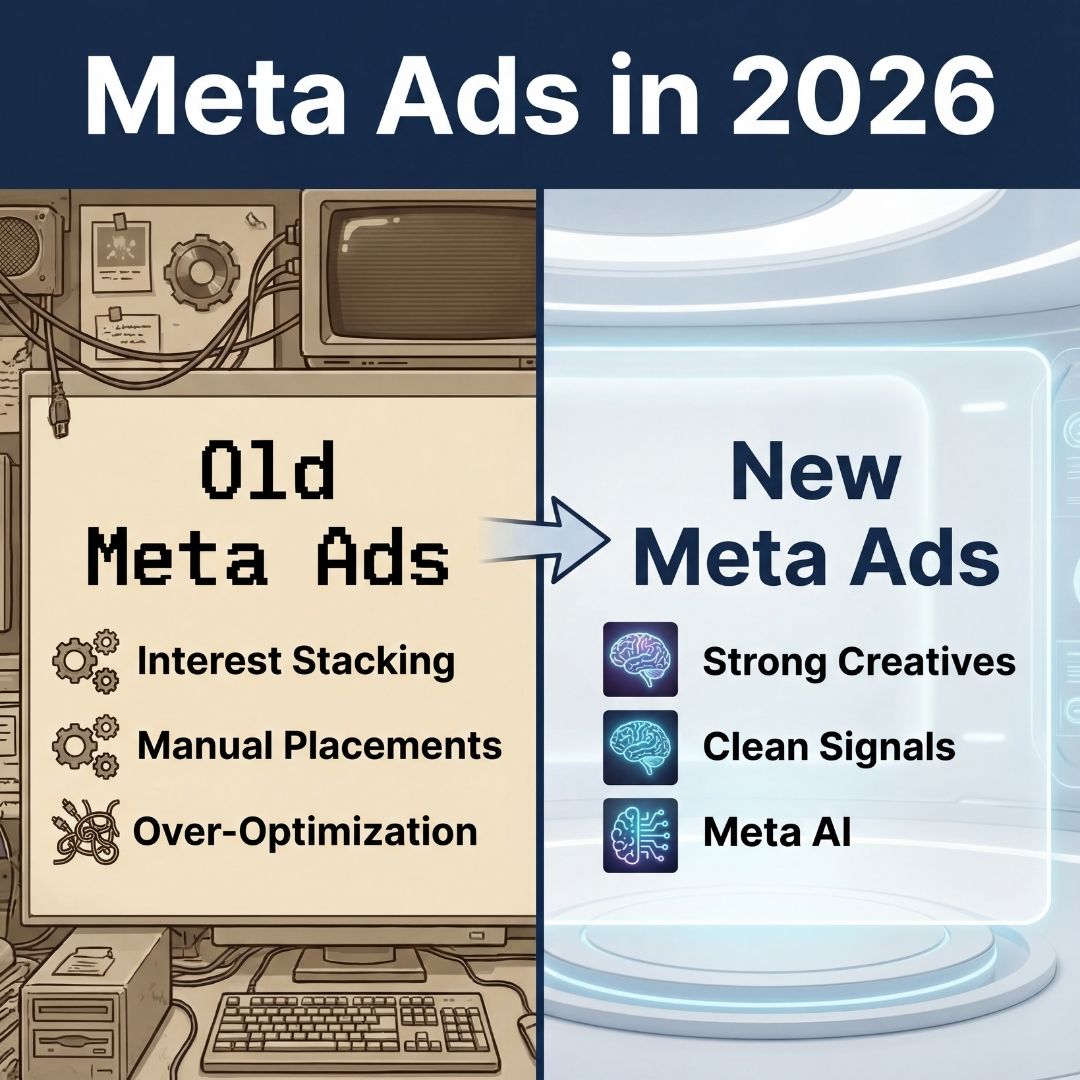
Meta seems to be seeing some of that play out already: sharper ad targeting, more relevant recommendations, and higher engagement have all strengthened its core business. Advertising still makes up the overwhelming majority of Meta's revenue, so even small AI-driven gains here can end up making a pretty sizable difference for the company overall.
If there's a thread here, it's that technology tends to land hardest when it shows up in ways people can actually feel.
Takeaway
A massive investment can open the door to new opportunities, but the outcome likely depends on how Meta continues to build on what it's already created.
For companies chasing the next major technology shift, having the money to invest is only part of the equation. What happens next likely comes down to knowing where that investment can create the most value, adapting as the technology and the market shift, and finding ways to turn new capabilities into products and experiences people actually use.
Looking Ahead
There are already some encouraging signs that parts of Meta's AI strategy are working, and the company has real momentum to point to. At the same time, Meta has had to adjust as its AI ambitions have grown, highlighting how difficult it can be to predict the true cost and scale of investments like this.
That may be what the next few years of AI investing look like: real progress in some areas, unexpected challenges in others, and technology moving so quickly that it's still too early to know which billion-dollar bets will ultimately pay off.