


The Spirit Airlines Controversy
The James Charles Spirit Airlines controversy shows that on social media, audiences can often react more strongly to perceived cruelty than controversy itself.
The backlash wasn’t because of simply by what Charles said, it was caused by the power imbalance between an influencer and laid off employee, the public nature of the humiliation, and the belief among many viewers that the incident revealed something about his character.
It Wasn’t About a Donation
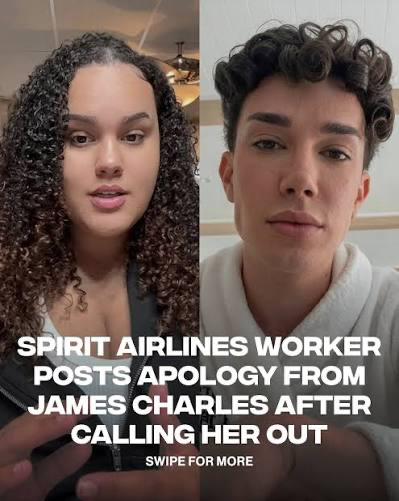
In May, Spirit Airlines collapsed leaving 17,000 employees without a job.
One of those employees, Amber Lendof Vargas, sent a message to James Charles explaining her situation and including a GoFundMe link.
Instead of ignoring the message, James responded in a harsh way. He said “you know what else would help you? Getting another job. Try that, because in the time it took you to copy and paste the same f**k-ass message to me, who you don’t follow by the way, and to one hundred other influencers and celebrities, you could’ve applied to a hundred other jobs, because you’re a lazy piece of s**t and you’re entitled. Why would I ever help you?”
This quickly spread and caused immediate backlash.
Unpopular Opinion or Intentional Cruelty?
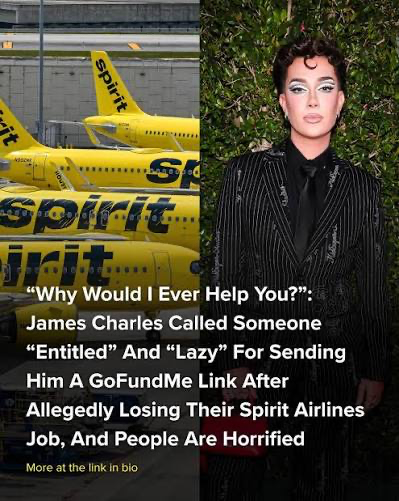
The criticism wasn’t that James refused to donate. It was how he responded.
Audiences make parasocial connections with influencers and they are constantly making judgments about character. People can forgive unpopular opinions, but intentional cruelty is a lot different as it speaks to who someone is rather than just what they think.
Viewers weren’t simply reacting to the controversial statement. Many believed they were genuinely seeing Charles' character and that perception of him led to even more backlash. From a marketing perspective, influencers operate as personal brands. When audience trust is broken, brand loyalty often follows.
A Private Message Became Public Content
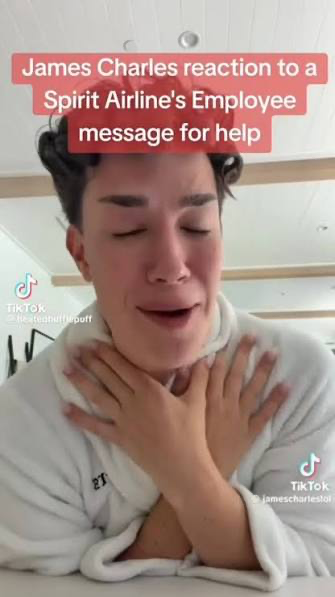
What made the situation worse was that her message wasn't just rejected…
It immediately became content.
Suddenly a private message was being discussed in front of millions of people. For many people, that felt unnecessarily cruel.
This reaction is heavily tied to social identity theory and empathy bias. Most viewers can relate to losing a job, struggling financially, or asking for help. Not many can relate to being a famous influencer with millions of dollars.
Because of that, people naturally empathised with Vargas instead of Charles. The situation also involved a clear power imbalance, which often influences how people assign blame and judge behavior.
From a marketing standpoint, perception became reality. Once audiences framed Vargas as the vulnerable one and Charles as the powerful one who was publicly mocking someone, the narrative became extremely hard to control.
The Apology Didn’t End the Story
After the backlash, Charles apologized publicly, reached out privately, and donated to her GoFundMe.
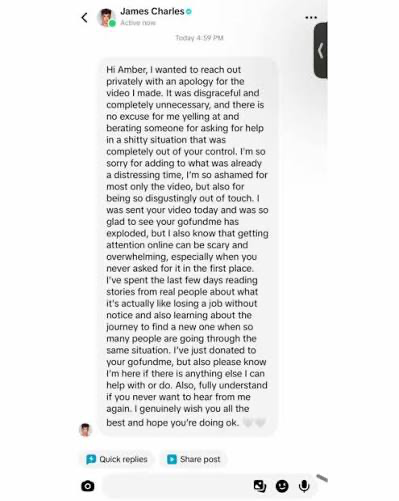
But the controversy continued.
By then, the conversation had become bigger than the original TikTok.
This reflects belief perseverance, which occurs when people continue holding a belief even after receiving new information. Once people saw how rude Charles was, they assumed that was who he was as a person and struggled to accept his apology.
The backlash was also amplified by the horn effect, a cognitive bias where one negative action influences how people evaluate someone's overall character.
From a reputation management perspective, this is one of the hardest situations for a public figure to overcome/ Audiences are willing to forgive mistakes, but when they believe this is someone's true character they are less likely to forgive someone.
Influencer Judgement Day
The James Charles Spirit Airlines controversy wasn't just another example of internet outrage.
It highlighted how audiences judge creators online.
People don’t turn away because Charles declined to donate. They turned away because many people believed Charles was showing his true character.
And once followers feel they've seen the real person behind the personal brand, changing the perception becomes a lot harder than saying sorry.