


A Case Study in Modern Marketing
The 'Millennial Marketing Team vs. Gen Z Interns' trend points at something real about the current state of advertising: consumers are increasingly trusting brands that market like people over brands that market like corporations.
It spread through a meme that became a mirror, a psychology shift that turned identity into the product, and a new rulebook for how brands actually win online.
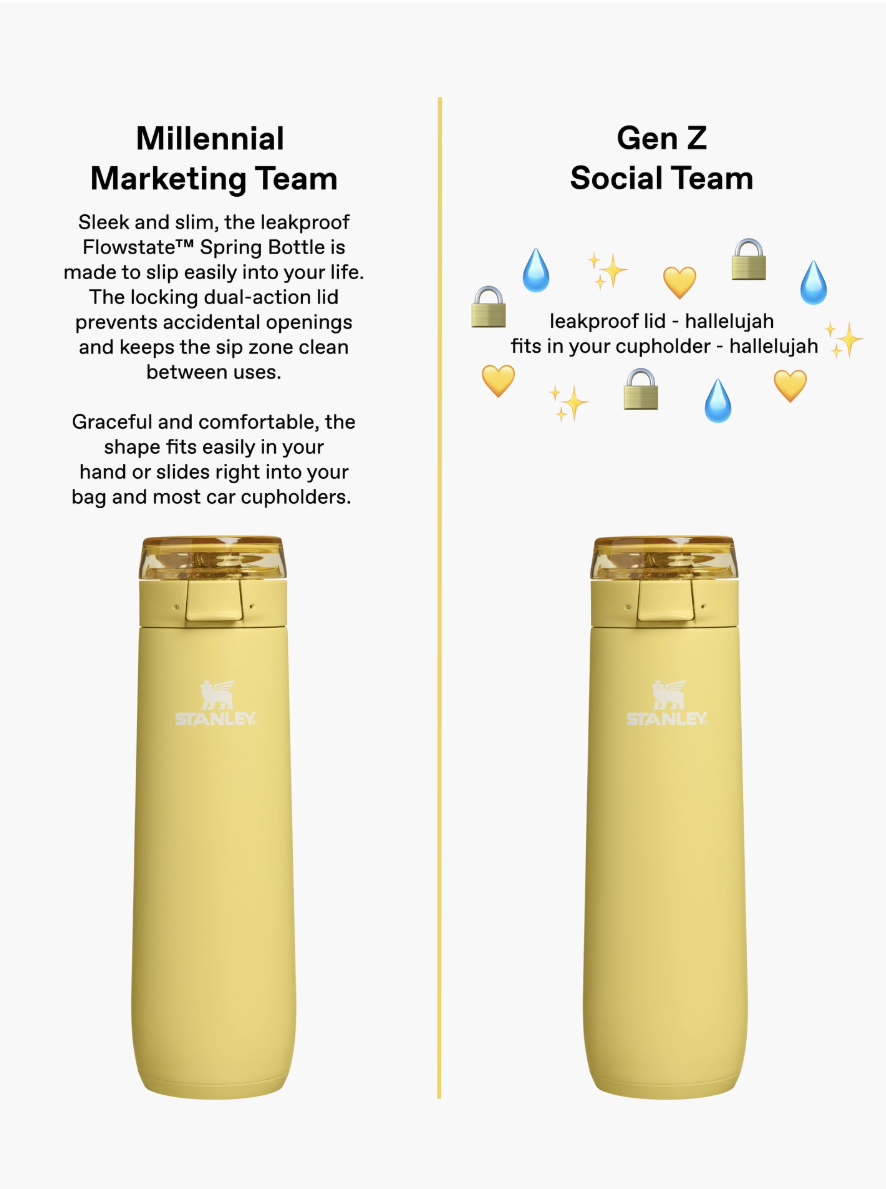
The Joke that Held Up a Mirror
The format is simple: two columns. The Millennial Marketing Team writes a paragraph that feels polished, structured, and warm. The Gen Z Interns post 'understood the assignment ' and somehow that's the whole campaign. Everyone tags a coworker, and the comment section becomes a generational battleground.
The reason it keeps spreading? It feels true.
Millennials entered the workforce shaped by the generation before them: show up polished, be professional, and prove your value through credibility. That was the playbook they inherited, and it followed them straight into brand marketing.
Gen Z grew up watching brands perform relatability, the forced hashtags, the 'we're a family here' energy, and by the time they got to brand accounts, they had a different read on what could actually work. So, ' hallelujah ' isn't a lazy caption, it's the same message with the corporate layer stripped off.
Underneath the joke is a generational gap, and it turns out that gap has everything to do with how people actually want to feel when a brand talks to them.
People Buy Feelings First, then Find Reasons Later
Turns out there's actual science behind why certain products take off. More often than not, people aren't buying for the features, they buy for status, identity, and belonging, and then come up with the logical reason afterward.
Take the Stanley cup: sure, it holds 40 ounces, but that's not why it sold out everywhere. People bought it because everyone had one, and having one meant something about who you were. More than a water bottle, it was a way into a community, and the marketing that clicks is built around exactly that: make people feel something, make them feel like they're part of something, and the sale takes care of itself.
Millennial marketing tries to get around this by being warm and relatable, and Gen Z content knocks the wall down entirely by acting like it doesn't care if you buy, which, weirdly, makes you want to. Either way, the goal is identical: the best marketing doesn't feel like it's trying to convince you of anything, it just makes you feel like buying was your idea.
That realization is exactly how brands figured out that showing up in culture beats selling into it.
Brands Used to Talk— Now they Participate
Once identity is the product, the question becomes how you get people to associate your brand with theirs. Old advertising was a monologue: brand talks, consumer listens. Social media flipped that completely. The brand posts, the community reacts, the community shares, and the goal shifted from a sales pitch to something people actually want to be part of.
Duolingo is the clearest example. Their content is a mix of language learning wrapped in memes and absurdity, and their owl just doing unhinged things that have nothing to do with learning at all. The idea is simple: earn someone's attention before you try to sell them anything. A straight grammar lesson post isn't going to do that, and Duolingo figured that out and made a chaotic owl the face of language learning.
This is brainrot marketing: slang, memes, deliberately low-effort content that doesn't look like advertising, so the audience never really puts their guard up. It works because the moment a brand stops feeling like an interruption and starts feeling like part of the conversation, selling becomes a lot easier.
The Internet Rewards “Sounding Human”
What this meme actually captures is simple: winning on social media has nothing to do with having the best product and everything to do with understanding how people actually talk online.
Millennial marketing humanized the corporate voice. Gen Z interns just got rid of it altogether.
Consumers don't want to be sold to, they want to feel like participants in the culture around them. The brands getting it right are the ones that care less about production quality and perfection, and more about making their content feel like something worth watching.
People don't hate marketing. They hate feeling marketed to.