

Intro
The 'Anyways, here's my outfit today' trend is proof that sometimes, the best way to get people to buy into something is to pretend you're not buying into it first.
It runs on a carefully constructed setup, a structure designed to hold attention until the very end, and a reveal that makes the engagement become the strategy.
A silly, carefully-curated setup
It starts the same way every time. A creator lists everything they're not buying into this season, like a pair of shoes, a style of sunglasses, whatever's flooding everyone's feeds, and knocks each one down with just enough conviction to sound like they mean it.
Then everything flips. On the last slide, or in the final seconds, they're wearing all of it, captioned with a flat, deadpan: "Anyways, here's my outfit today."
Good joke, but also a really smart content structure. Every dismissal before the reveal is basically a reason to keep watching, and keeping people watching is exactly how you get the algorithm to do the rest of the work for you.
Why you keep watching (and scrolling)
The trend works because it leaves something unresolved. Hearing "I'm not buying those sunglasses" makes you wonder if that's actually true, and the only way to find out is to keep watching or keep swiping, which is exactly what Instagram's algorithm rewards.
There's no 'Sponsored' label, no obvious pitch, nothing that tells your brain to switch into ad-filtering mode. Instead of signaling promotion, the whole setup is engineered to make you curious, and curiosity is a much harder thing to scroll past than a sponsored post.
From a marketing standpoint, that's the whole game. Organic engagement is the thing every brand is chasing, and this trend generates it without ever looking like it's trying.
The joke becomes the engagement strategy
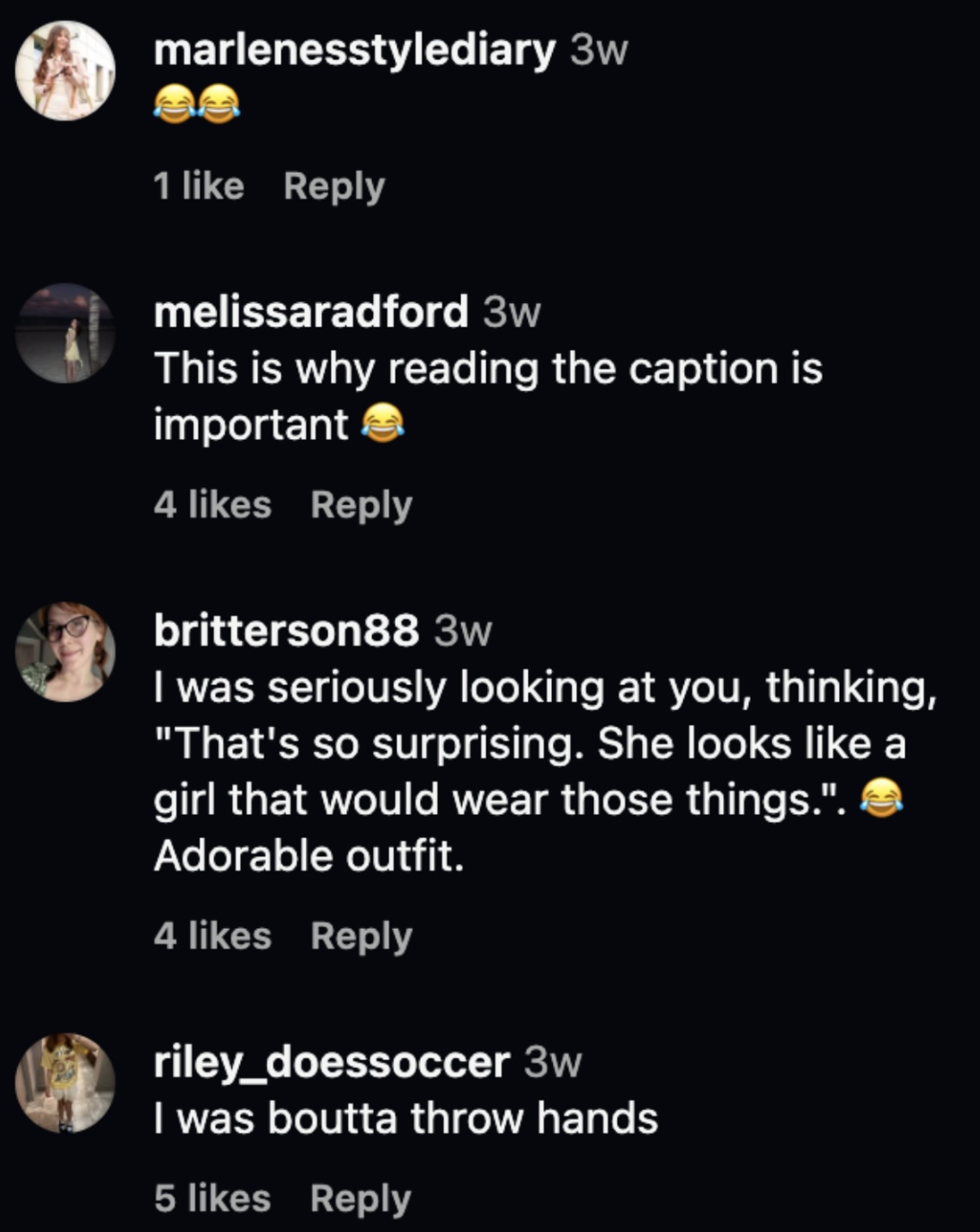
What actually drives this trend is how it gets people to react, and the comment section is where that plays out.
Some viewers hit the reveal and feel relieved, like the creator just gave them permission to like something they were already eyeing. Others thought they were on the same page as the creator, right up until the reveal made it clear they weren't.
Either way, everyone “gets got” one way or another. That's reverse psychology marketing at its most effective, and every tag, every comment, every share is proof that the less something feels like marketing, the better it performs.
Reverse psychology, dressed up as a fit check
None of this is technically an ad, which is exactly why it works like one. An obvious promotion feels like a pitch, and people clock it immediately. Mocking something, rejecting it, and then showing up wearing it anyway doesn't read that way at all.
That "Anyways, here's my outfit today" caption is a small detail doing a big job. It signals joke, not pitch, and that's what lets viewers engage without ever feeling like they're being sold to, even when they are.
In a feed full of obvious ads, the most persuasive move is the one that doesn't look like a move at all.