

Intro
Spotify turned 20 and made their whole birthday campaign about you, and that was the whole strategy.
This time capsule, memory lane-coded move was built on nostalgia designed to be shared,
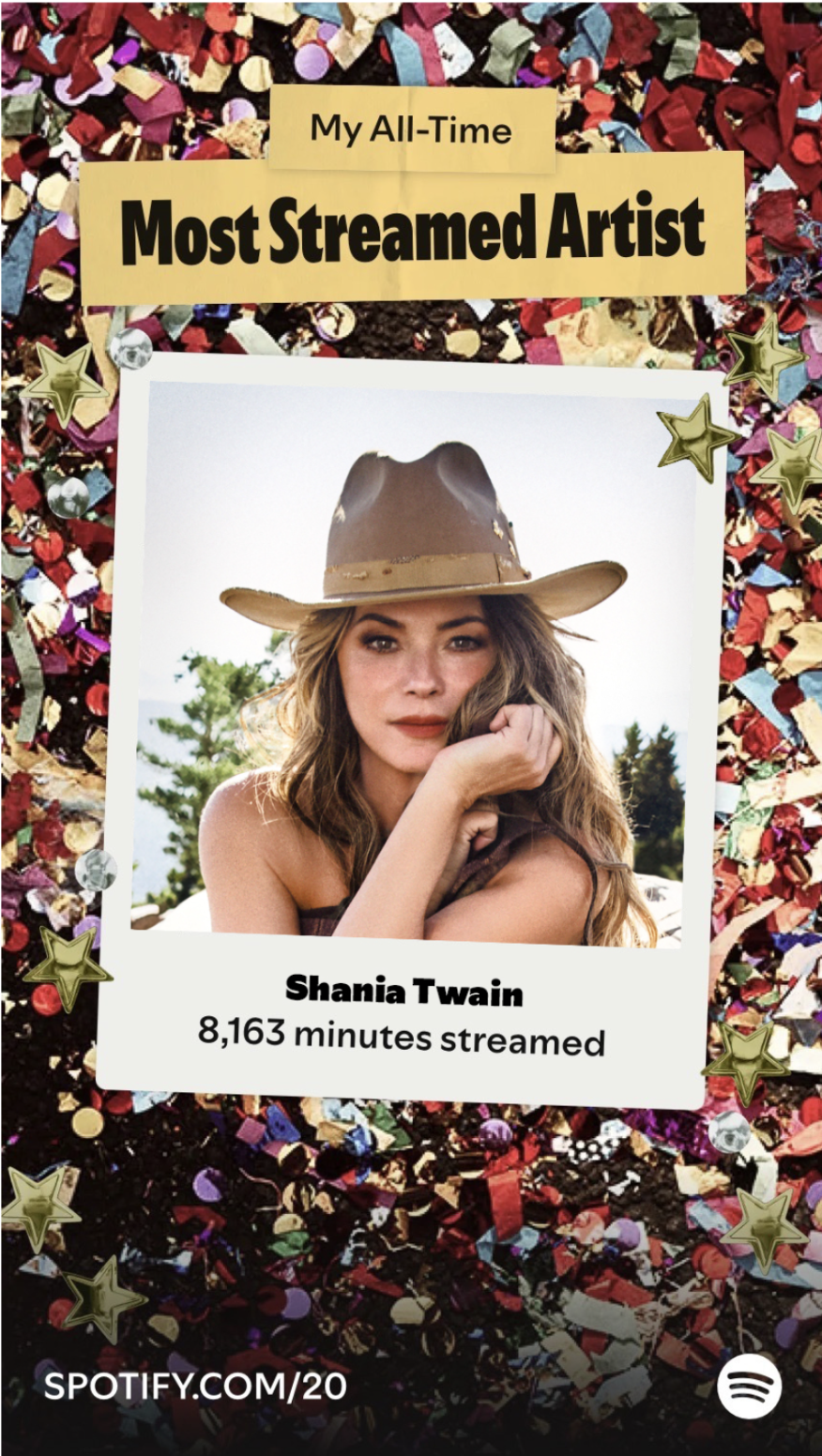
a feedback loop where every reaction was free marketing,
and a masterclass in making data feel personal.
Nostalgia as a sharing engine
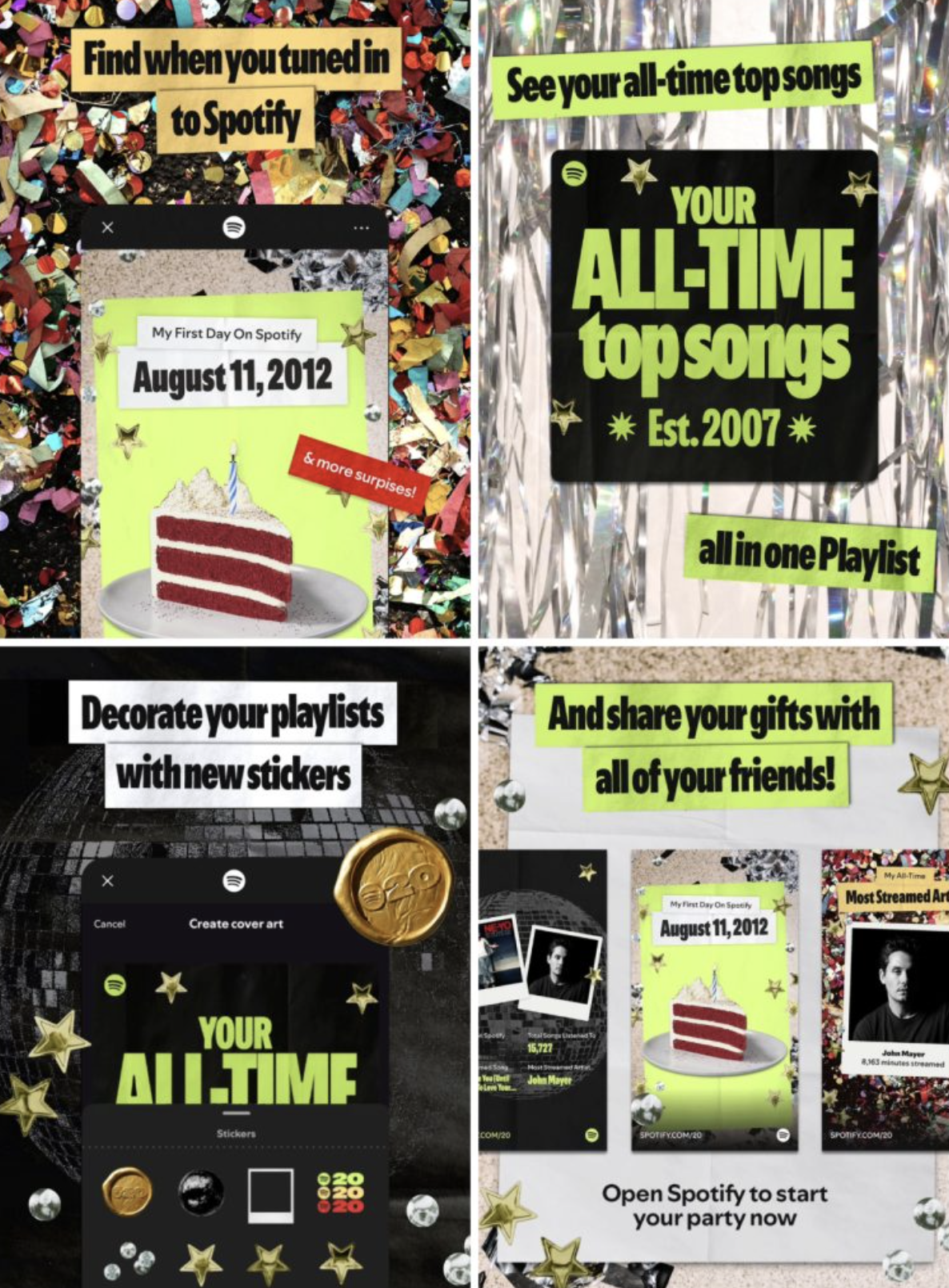
On April 23rd, 2026, Spotify sent a notification to millions of users at once. Not a new feature, not a sale. Just, "here's your entire Spotify history."
For a lot of people, that was enough to stop scrolling, because it wasn't random trivia. It was your middle school phase, your post-breakup playlist, the artist you were obsessed with before quietly deleting them from everything around 2019 and never bringing it up again.
That's what makes nostalgia so useful as a marketing tool: it doesn't just make you feel something, it makes you want to share it. Wrapped already showed this every December. The birthday feature just went further back, and the further back it went, the more personal and irresistible it got to post about.
The engagement trap (you walked into it)
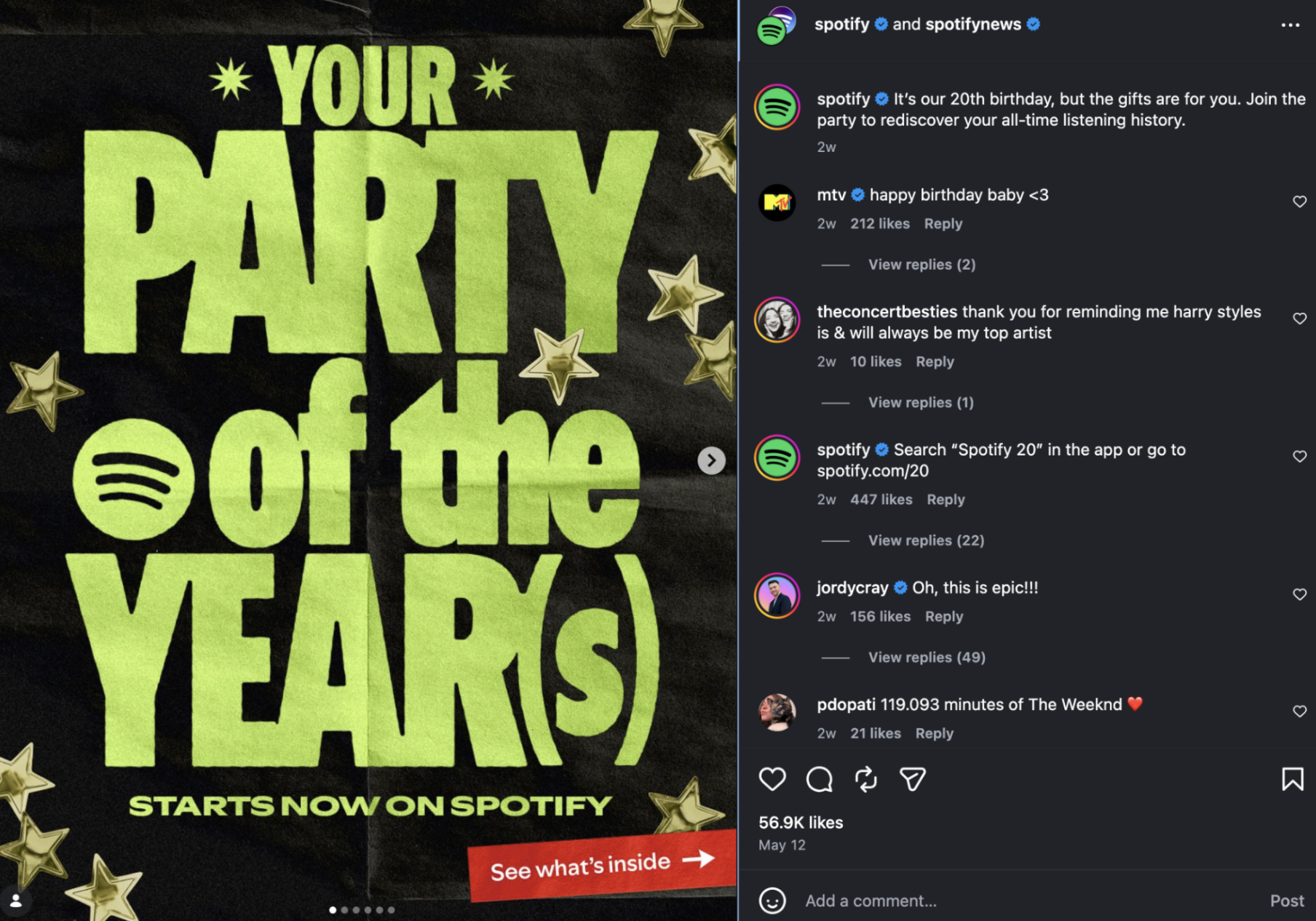
Here's the part Spotify will never say out loud: it didn't matter how you participated. The whole experience was engineered so every reaction fed the same machine.
Posted every card? Free advertising. Only shared the good stats? Still kept the trend going. Complained on your Story about how embarrassing your history was? That's still a post about Spotify.
And then there's the nosiness factor, which is honestly why this worked as well as it did. You tapped through everyone else's Stories even when you weren't posting your own, because once you saw someone's first streamed song, you needed to know how yours compared.
Psychologists call this social comparison theory: we naturally measure ourselves against others, and Spotify turned 20 years of listening habits into a personality test people compare, flex about, or quietly spiral over at 2am.
In any case, it didn’t matter how you showed up to the party. Spotify just needed you there.
Data as a love language
Spotify quietly sitting on two decades worth of your data is a lot. Twenty years of hyperfixations, heartbreak albums, "400 plays in one month" eras, and probably a few artists or songs you’d rather not confront publicly.
Most companies would use that to sell you something: better ads, a premium push, a playlist you never asked for. Spotify just... sent it back. Framed not as data, but as a story about you.
Ultimately, that reframe is what makes Spotify feel less like a subscription and more like something that actually knows you. It's like the difference between a friend you just keep around versus one who actually cherishes every era you've been through, birthday included.
The gift was yours all along
Spotify didn't invent nostalgia, social comparison, or personalization. What they did was engineer all three into one campaign, where the emotion made you share, the loop made every reaction count, and the data felt like a gift instead of surveillance.
The content cost them almost nothing to produce. The distribution was you, and what they walked away with is worth more than any ad spend could buy: millions of people who felt genuinely seen by a streaming app on its birthday.
The gift was yours all along. That was the point.