


Why Euphoria’s Music Hits So Hard?

A huge part of Euphoria’s identity has always been its collaboration with Labrinth. In seasons 1 and 2, his music wasn’t just background noise; it actively shaped the story. It stretched tension, made uncomfortable moments linger, and pulled viewers deeper into the emotional headspace of each scene.
Take Nate Jacobs’ introduction in Season 1, Episode 2, for example. Before you really know anything about him, the music already puts you on edge. There’s this intense, low, creeping unease that makes him feel threatening and unpredictable right away. That reaction isn’t coming from what he says; it’s coming from what you hear.
That’s the power of it. The score subtly controls pacing, deciding when a moment should drag out and when it should hit fast. It shapes how long you sit in an emotion and how intense that emotion becomes.
On a psychological level, the brain blends sound and visuals into one experience. Over time, you start associating certain sounds with specific feelings: panic, heartbreak, chaos, release. So when that musical layer is reduced or missing, it changes how everything lands. Scenes feel flatter, tension doesn’t build the same way, and emotional beats don’t hit as hard.
Music as Branding (Not Just Sound)
Zooming out, Euphoria is also a prime example of how music becomes part of a show’s identity. In a series this stylized, the soundtrack isn’t just supporting the story; it’s part of the brand.
It helps define the vibe people instantly recognize in edits, trailers, and clips online. It’s what turns scenes into moments, and moments into something people revisit and share.
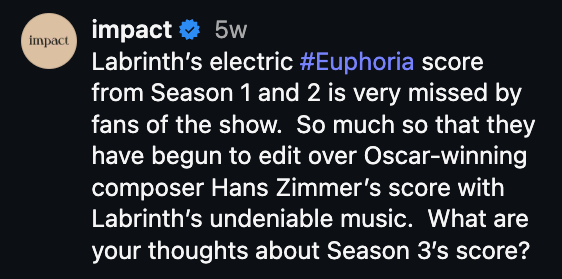
That’s why fans have started re-editing season 3 scenes with Labrinth’s older tracks. Some of it might be nostalgia, but more than that, it feels like people trying to recreate the version of the show that hit the hardest emotionally: the one that felt the most complete.
So, Why Does It Matter So Much?

At its core, this comes down to emotional conditioning. Euphoria trained its audience to experience its story in a specific rhythm, and music was central to that.
So when that piece changes, everything else feels different too. The plot might still be there, but the emotional structure isn’t hitting the same.
Because Euphoria has never just been about plot. It’s about vibe, memory, and emotional impact, and music is one of the biggest tools shaping all three.