


Attention vs. Approval
Euphoria's final season was its most divisive and its most watched, proof that modern media doesn't always reward being liked. Sometimes it just rewards being impossible to ignore.
Its rebrand swapped coming-of-age stakes for shock value and over-the-top crime drama, fractured trust with a loyal fanbase quick to notice the shift, and created a backlash cycle that, intentional or not, generated exactly what every brand wants most: attention.
Euphoria Drifted From What Built It
Season one made Euphoria specific and created its iconic brand: teenage identity, addiction, mental health, messy relationships, shot in a style nothing else on TV had. Season two got messier and more chaotic, but it still felt like Euphoria.
Season three broke that identity. The characters were grown up, married, running OnlyFans accounts, caught in drug plots closer to Breaking Bad meets Grand Theft Auto than a teen drama. Critics took notice, and for the first time in its run, the season landed a rotten score on Rotten Tomatoes instead of certified fresh.
A lot of the online reaction had less to do with whether the show was good than whether anyone could still recognize it, a disconnect that, for a lot of longtime fans, felt deeply personal.
Fans Don’t Just Watch, They Protect
The same fans who turned Euphoria into a phenomenon were the first ones to turn on it. Every post that started with "this isn't the Euphoria I fell in love with" carried real weight, because for a lot of longtime viewers, the show had stopped feeling like theirs.
That reaction makes more sense once you understand psychological ownership, the feeling that something belongs to you because you've spent years invested in it, even though you never owned a single frame of it.
On the fans' end, it's not a contradiction that the most devoted became the harshest critics, because that's exactly what deep attachment looks like once it feels threatened.
On HBO's end, however, attention is attention either way, because a bigger threat to a brand isn't always backlash. It's silence.
The Backlash Was the Marketing
Rotten TomatoesHere are all three seasons of #Euphoria, ranked by Tomatometer. www.facebook.com/rottentomatoes/posts/here-are-all-three-seasons-of-euphoria-ranked-by-tomatometer-/1394751226013463Every angry post still kept Euphoria in the conversation, turning into another tweet, another TikTok, another reaction video, another think piece, each one introducing the show to someone who'd never watched a single episode. For HBO, that's another subscriber logging on, another stream counted, and another dollar in the bank.
The thing about brands is they don't actually need approval to win, they just need eyes on their product, and Euphoria proved both halves of that truth at once. It dominated the conversation while frustrating the people who cared about it most.
Despite the mixed reviews, season three averaged about 25 million viewers, up from season two, and the finale became the most talked about episode of the entire show's run.
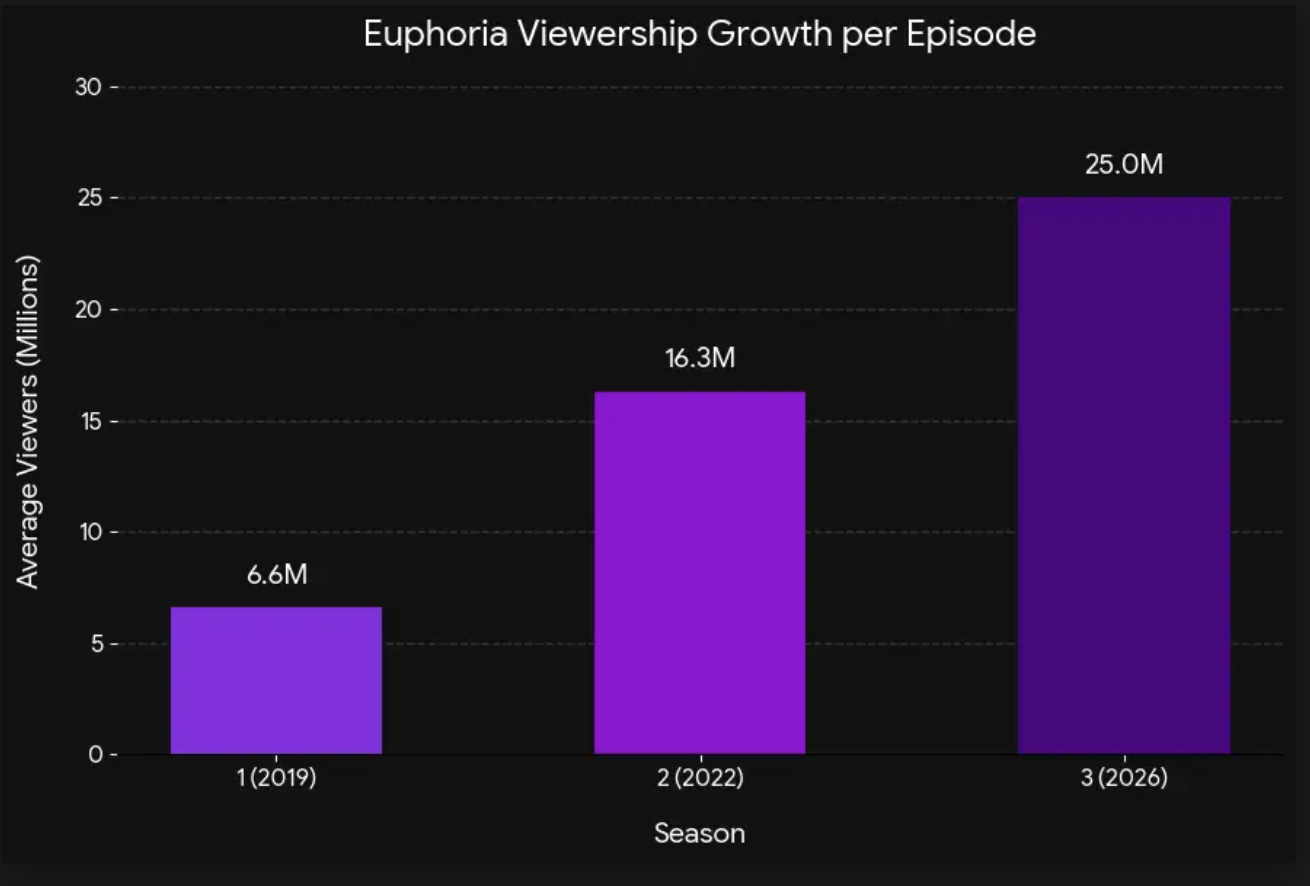
In summary, it didn't really matter that Euphoria felt like a completely different show. Everyone was still watching, still talking, and that might have been the point all along.
A Rebrand Doesn’t Have to Be Liked to Work
What the finale made clear is that fans weren't fully mourning a bad season, they were mourning the specificity that used to define the show, and that's exactly what made its absence impossible to ignore.
Between a full genre pivot nobody saw coming and a fanbase that rushed to social media either to defend it or tear it apart, the conversation never stopped, and that's exactly how a divisive season stops looking like a failure and actually starts looking like a branding win, whether anyone at HBO planned it that way or not.
Maybe that's the actual ending: not Rue, not the finale, but proof that a brand can survive losing its fans' approval as long as it never loses their attention.